Hill sphere
Hill sphere is a with regards to an astronomical body, the region in which it dominates the attraction of satellites.
All 2 facts, and where they come from
Facts
2 facts · 0 confirmed by two sources · 0 cited · 2 from one source
Where this comes from
Papalocal keeps its own record. It started from these sources; what each one said is kept here as it was copied, so a change on their side never changes this page by itself. Tap one to read its version.
What Wikidata says · copied November 17, 2026 · revision 2568792014
- Described as
- with regards to an astronomical body, the region in which it dominates the attraction of satellites
- Other names
- Roche sphere
- What it is
- rule
- Named after
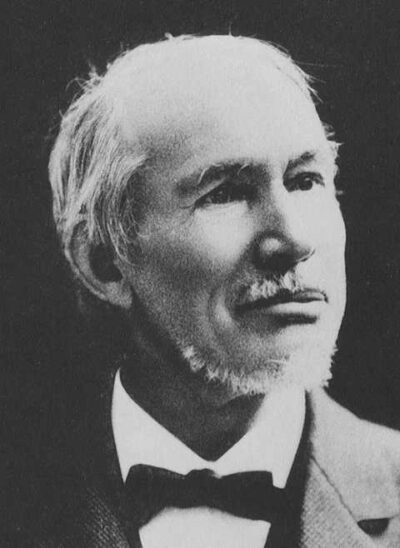
- George William Hill
- Wikipedias with a page
- 36
Wikidata item Q498792 (wikidata.org/wiki/Q498792), public domain (CC0). Copied 2026-11-17.
What Wikipedia says · copied November 17, 2026 · revision 1386157136
In celestial mechanics, the Hill sphere is a common model for the calculation of a gravitational sphere of influence. It is the most commonly used model to calculate the spatial extent of gravitational influence of an astronomical body (m) in which it dominates over the gravitational influence of other bodies, particularly a primary (M). It is sometimes confused with other models of gravitational influence, such as the Laplace sphere or the Roche sphere, the latter of which causes confusion with the Roche limit. It was defined by the American astronomer George William Hill, based on the work of the French astronomer Édouard Roche.
To be retained by a more massive, hence more gravitationally attracting, astrophysical object—a planet by a star, a moon by a planet—the less massive body must have an orbit that lies within the gravitational potential represented by the more massive body's Hill sphere. That moon would, in turn, have a Hill sphere of its own, and any object within that distance would tend to become a satellite of the moon, rather than of the planet itself.
The formula for the Hill sphere, as derived by George William Hill, isrh=r3[m/3M]
where rh is the radius of the hill sphere, r is the distance between the small and large bodies, m is the mass of the less massive body and M is the mass of the more massive body.One simple view of the extent of the Solar System is that it is bounded by the Hill sphere of the Sun (engendered by the Sun's interaction with the galactic nucleus or other more massive stars). A more complex example is the one at right, the Earth's Hill sphere, which extends between the Lagrange points L1 and L2, which lie along the line of centers of the Earth and the more massive Sun. The gravitational influence of the less massive body is least in that direction, and so it acts as the limiting factor for the size of the Hill sphere; beyond that distance, a third object in orbit around the Earth would spend at least part of its orbit outside the Hill sphere, and would be progressively perturbed by the tidal forces of the more massive body, the Sun, eventually ending up orbiting the latter.
From the Wikipedia article “Hill sphere” (en.wikipedia.org/wiki/Hill_sphere), by its contributors, under CC BY-SA 4.0 (creativecommons.org/licenses/by-sa/4.0/). Copied 2026-11-17; not changed.
Confirmed Two sources agree. Cited One source, and it names where it got it. One source One source, without a reference of its own. Sources disagree The sources disagree. We show the best-supported value and keep theirs below.
Picture: Wikimedia Commons: Lagrange points2.svg · See Commons file page