Hirohito surrender broadcast
Hirohito surrender broadcast is a radio broadcast in which Emperor Hirohito announced the Japanese surrender in World War II. It came out in 1945. It was written by Hisatsune Sakomizu, Mizuho Kawada and Masahiro Yasuoka.
- Released
- August 15, 1945
- Came out
- August 15, 1945
- Written by
- Hisatsune Sakomizu
- Country of origin
- Empire of Japan
All 11 facts, and where they come from
Facts
11 facts · 0 confirmed by two sources · 0 cited · 11 from one source
Where this comes from
Papalocal keeps its own record. It started from these sources; what each one said is kept here as it was copied, so a change on their side never changes this page by itself. Tap one to read its version.
What Wikidata says · copied November 17, 2026 · revision 2549377102
- Described as
- radio broadcast in which Emperor Hirohito announced the Japanese surrender in World War II
- Other names
- Gyokuon-hōsō, Jewel Voice Broadcast, Imperial Rescript on the Termination of the War
- What it is
- radio speech; imperial edict; harangue
- Written by
- Hisatsune Sakomizu; Mizuho Kawada; Masahiro Yasuoka
- Released
- August 15, 1945
- Language
- Classical Japanese
- Country of origin
- Empire of Japan · 1 reference; Japan
- Came out
- August 15, 1945
- Wikipedias with a page
- 34
Wikidata item Q709465 (wikidata.org/wiki/Q709465), public domain (CC0). Copied 2026-11-17.
What Wikipedia says · copied November 17, 2026 · revision 1384804367
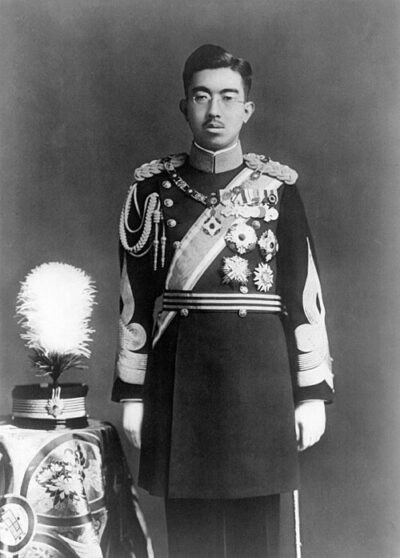
The Hirohito surrender broadcast (Japanese: 玉音放送, Hepburn: Gyokuon-hōsō; lit. 'Broadcast of the Emperor's Voice') was a radio broadcast of surrender given by Hirohito, the emperor of Japan, on August 15, 1945.
It announced to the Japanese people that the Japanese government had accepted the Potsdam Declaration, which demanded the unconditional surrender of the Japanese military at the end of World War II. Following the Hiroshima bombing on August 6, and the Soviet declaration of war and Nagasaki bombing on August 9, the Emperor's speech was broadcast at noon Japan Standard Time on August 15, 1945, and referred to the atomic bombs as a reason for the surrender.
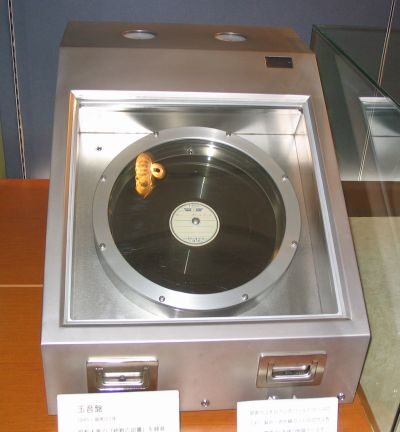
The speech is the first known instance of a Japanese emperor speaking to the common people (albeit via a phonograph record). It was delivered in formal Classical Japanese, with much pronunciation unfamiliar to ordinary Japanese. The speech made no direct reference to a surrender of Japan, instead stating that the government had been instructed to accept the "joint declaration" (the Potsdam Declaration) of the United States, the United Kingdom, China, and the Soviet Union. This confused many listeners not familiar with the declaration about whether Japan had actually surrendered. Both the poor audio quality of the radio broadcast and the formal courtly language worsened the confusion.
From the Wikipedia article “Hirohito surrender broadcast” (en.wikipedia.org/wiki/Hirohito_surrender_broadcast), by its contributors, under CC BY-SA 4.0 (creativecommons.org/licenses/by-sa/4.0/). Copied 2026-11-17; not changed.
Confirmed Two sources agree. Cited One source, and it names where it got it. One source One source, without a reference of its own. Sources disagree The sources disagree. We show the best-supported value and keep theirs below.
Picture: Sphl at Japanese Wikipedia, via Wikimedia Commons · CC BY-SA 3.0