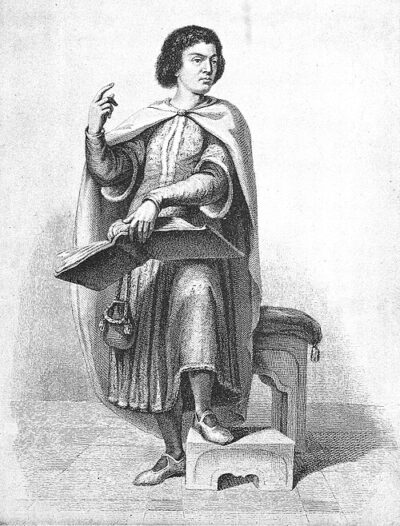
Historia Calamitatum
Historia Calamitatum is a memoir or auto biography of Abelard. It came out in 1132. It was written by Peter Abelard.
- Came out
- 1132
- Written by
- Peter Abelard
- Genre
- autobiography
All 5 facts, and where they come from
Facts
5 facts · 0 confirmed by two sources · 0 cited · 5 from one source
Where this comes from
Papalocal keeps its own record. It started from these sources; what each one said is kept here as it was copied, so a change on their side never changes this page by itself. Tap one to read its version.
What Wikidata says · copied November 17, 2026 · revision 2563279735
- Described as
- memoir or auto biography of Abelard
- What it is
- literary work
- Written by
- Peter Abelard
- Genre
- autobiography
- Language
- medieval Latin
- Came out
- 1132
- Wikipedias with a page
- 11
Wikidata item Q2960332 (wikidata.org/wiki/Q2960332), public domain (CC0). Copied 2026-11-17.
What Wikipedia says · copied November 17, 2026 · revision 1384743590
Historia Calamitatum (known in English as The Story of My Misfortunes or The History of My Calamities), also known as Abaelardi ad Amicum Suum Consolatoria, is an autobiographical work in Latin by Peter Abelard (1079–1142), a medieval French pioneer of scholastic philosophy. The work, written in 1132 or soon after, is one of the first autobiographical works in medieval Western Europe, written in the form of a letter (and, as such, is clearly influenced by Augustine's Confessions).
The letter is an extensive self-analysis of Abelard up to the age of about fifty-four, and provides readers with knowledge of his views of women, learning, monastic life, Church and State combined, and the social milieu of the time.
Abelard emphasizes how persecuted he feels by his peers throughout the work. He quotes saints, apostles, and at one point, compares his struggles to those of Christ.
From the Wikipedia article “Historia Calamitatum” (en.wikipedia.org/wiki/Historia_Calamitatum), by its contributors, under CC BY-SA 4.0 (creativecommons.org/licenses/by-sa/4.0/). Copied 2026-11-17; not changed.
Confirmed Two sources agree. Cited One source, and it names where it got it. One source One source, without a reference of its own. Sources disagree The sources disagree. We show the best-supported value and keep theirs below.