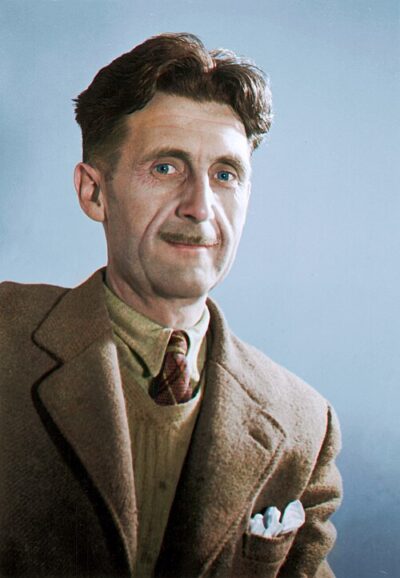
Homage to Catalonia
Homage to Catalonia is a 1938 memoir by George Orwell.
- Published
- April 25, 1938
- Written by
- George Orwell
- Genre
- autobiography
- Country of origin
- United Kingdom
All 9 facts, and where they come from
Facts
9 facts · 0 confirmed by two sources · 0 cited · 9 from one source
Where this comes from
Papalocal keeps its own record. It started from these sources; what each one said is kept here as it was copied, so a change on their side never changes this page by itself. Tap one to read its version.
What Wikidata says · copied November 17, 2026 · revision 2518327264
- Described as
- 1938 memoir by George Orwell
- What it is
- literary work
- Written by
- George Orwell
- Publisher
- Harvill Secker
- Genre
- autobiography
- Published
- April 25, 1938
- Language
- English
- Country of origin
- United Kingdom · 1 reference
- Comes after
- The Road to Wigan Pier · 1 reference
- Followed by
- Coming Up for Air
- Wikipedias with a page
- 39
Wikidata item Q514694 (wikidata.org/wiki/Q514694), public domain (CC0). Copied 2026-11-17.
What Wikipedia says · copied November 17, 2026 · revision 1384222436
Homage to Catalonia is a memoir and the sixth book by English writer George Orwell published in 1938, in which he accounts his personal experiences and observations while fighting in the Spanish Civil War.
Covering the period between December 1936 and June 1937, Orwell recounts Catalonia's revolutionary fervor during his training in Barcelona, his boredom on the front lines in Aragon, his involvement in the interfactional May Days conflict back in Barcelona on leave, him getting shot in the throat back on the front lines, and his escape to France after the POUM was declared an illegal organization. The war was one of the defining events of his political outlook and a significant part of what led him to write in 1946, "Every line of serious work that I have written since 1936 has been written, directly or indirectly, against totalitarianism and for democratic socialism, as I understand it."
Initial reception was mixed, often depending on whether the reviewers' analyses of events aligned with Orwell's. Praise was reserved for his vivid depiction of life on the frontlines, while criticisms were aimed at his denunciations of the Republican government and Communist Party. It received a second wave of popularity during the 1950s, after the popularity of Orwell's novels Animal Farm (1945) and Nineteen Eighty-Four (1949) attracted a reevaluation of the book, with American liberal intellectuals presenting it as a work of anti-communism. During the 1960s, figures in the New Left again recontextualised it through the lens of revolutionary socialism, opposed both to Marxism-Leninism and capitalism, which attracted another wave of criticism from figures in the Communist Party of Great Britain (CPGB). Since the Spanish transition to democracy, some historians have cautioned against reading Orwell's first-person account as a representation of the conflict as a whole.
From the Wikipedia article “Homage to Catalonia” (en.wikipedia.org/wiki/Homage_to_Catalonia), by its contributors, under CC BY-SA 4.0 (creativecommons.org/licenses/by-sa/4.0/). Copied 2026-11-17; not changed.
Confirmed Two sources agree. Cited One source, and it names where it got it. One source One source, without a reference of its own. Sources disagree The sources disagree. We show the best-supported value and keep theirs below.
Picture: Wikimedia Commons: Orwell Hommage a la Catalogne.jpg · See Commons file page