Homaranismo
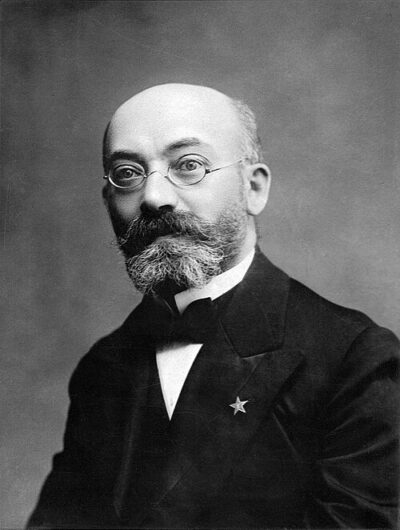
Homaranismo is a proposed world religion. It came out in 1906. It was created by L. L. Zamenhof.
- Came out
- 1906
- Created by
- L. L. Zamenhof
All 4 facts, and where they come from
Facts
4 facts · 0 confirmed by two sources · 2 cited · 2 from one source
Where this comes from
Papalocal keeps its own record. It started from these sources; what each one said is kept here as it was copied, so a change on their side never changes this page by itself. Tap one to read its version.
What Wikidata says · copied November 17, 2026 · revision 2439567511
- Described as
- proposed world religion
- Other names
- humanitism
- What it is
- ideology; religion · 1 reference
- Created by
- L. L. Zamenhof · 1 reference
- Came out
- 1906
- Wikipedias with a page
- 26
Wikidata item Q1426400 (wikidata.org/wiki/Q1426400), public domain (CC0). Copied 2026-11-17.
What Wikipedia says · copied November 17, 2026 · revision 1367791604
Homaranismo (English: Humanitism) is a philosophy based on a set of principles for a moral common ground across religious divisions, developed by L. L. Zamenhof, who laid the foundations of the Esperanto language. Based largely on the teachings of Hillel the Elder, Zamenhof originally called it Hillelism. He sought to reform Judaism because he hoped that without the strict dress code and purity requirements, it would no longer be the victim of antisemitic propaganda. The basis of Homaranismo is the sentence known as the Golden Rule: One should treat others as one would like others to treat oneself.
Zamenhof wrote in the preface to his book Homaranismo:Under the name "Homaranismo" [...] I mean "striving for humanity", for the elimination of interethnic hatred and injustice, and for such a way of life that could gradually lead not theoretically but practically to the spiritual unification of humanity.
Based on this idea, he came to the conclusion that this philosophy could be a bridge between religions, not just a subset of Judaism. Zamenhof subsequently renamed his philosophy Homaranismo.
While many different motivations drew early Esperantists to that movement, for Zamenhof, Esperanto was always a means by which to facilitate improved human relations, especially beyond boundaries of race, language and culture. Zamenhof's daughter Lidia embraced this philosophy and taught it alongside Esperanto and her adopted religion, the Baháʼí Faith.
Despite his Esperanto language project, Zamenhof said of Homaranismo, "It is indeed the object of my whole life. I would give up everything for it."
Zamenhof developed his ideas on Homaranismo in two works: Hilelismo (1901) and Homaranismo (1913).
From the Wikipedia article “Homaranismo” (en.wikipedia.org/wiki/Homaranismo), by its contributors, under CC BY-SA 4.0 (creativecommons.org/licenses/by-sa/4.0/). Copied 2026-11-17; not changed.
Confirmed Two sources agree. Cited One source, and it names where it got it. One source One source, without a reference of its own. Sources disagree The sources disagree. We show the best-supported value and keep theirs below.