Hopkinson's law
Hopkinson's law is a feature of ferromagnetic or ferrimagnetic materials.
All 1 facts, and where they come from
Facts
1 facts · 0 confirmed by two sources · 0 cited · 1 from one source
Where this comes from
Papalocal keeps its own record. It started from these sources; what each one said is kept here as it was copied, so a change on their side never changes this page by itself. Tap one to read its version.
What Wikidata says · copied November 19, 2026 · revision 2518011906
- Described as
- feature of ferromagnetic or ferrimagnetic materials
- Other names
- Hopkinson effect
- What it is
- physical law
- Wikipedias with a page
- 6
Wikidata item Q3048940 (wikidata.org/wiki/Q3048940), public domain (CC0). Copied 2026-11-19.
What Wikipedia says · copied November 19, 2026 · revision 1344406043
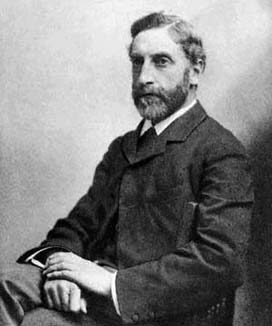
The Hopkinson effect is a feature of ferromagnetic or ferrimagnetic materials, in which an increase in magnetic susceptibility is observed at temperatures between the blocking temperature and the Curie temperature of the material. The Hopkinson effect can be observed as a peak in thermomagnetic curves that immediately precedes the susceptibility drop associated with the Curie temperature. It was first observed by John Hopkinson in 1889 in a study on iron.
In single domain particles, a large Hopkinson peak results from a transient superparamagnetic particle domain state.
From the Wikipedia article “Hopkinson effect” (en.wikipedia.org/wiki/Hopkinson_effect), by its contributors, under CC BY-SA 4.0 (creativecommons.org/licenses/by-sa/4.0/). Copied 2026-11-19; not changed.
Confirmed Two sources agree. Cited One source, and it names where it got it. One source One source, without a reference of its own. Sources disagree The sources disagree. We show the best-supported value and keep theirs below.