
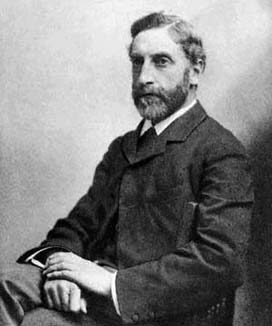
John Hopkinson
John Hopkinson was a British physicist and electrical engineer. Born July 27, 1849, in Manchester. Died August 27, 1898, in Val d'Hérens. Positions held include chairperson (2 times) (1890–1896). Known for Hopkinson's law and Hopkinson's law. Educated at University of London and Trinity College. Awards include Royal Medal and Smith's Prize.
Facts
31 facts · 2 confirmed by two sources · 15 cited · 13 from one source · 1 where the sources disagree
What’s different
- Died in: we show Val d'Hérens (Sources disagree). Wikidata also lists Petite Dent de Veisivi
Where this comes from
Papalocal keeps its own record. It started from these sources; what each one said is kept here as it was copied, so a change on their side never changes this page by itself. Tap one to read its version.
What Wikidata says · copied November 18, 2026 · revision 2553930139
- Described as
- British physicist and electrical engineer (1849–1898)
- Born
- July 27, 1849 · 6 references
- Died
- August 27, 1898 · 6 references
- Born in
- Manchester · 2 references
- Died in
- Petite Dent de Veisivi · 1 reference; Val d'Hérens · 2 references
- Buried in
- Territet cemetery · 1 reference
- Cause of death
- mountaineering accident · 1 reference
- Citizen of
- United Kingdom of Great Britain and Ireland
- Occupation
- physicist; engineer · 1 reference; mathematician
- Positions held
- chairperson (2 times) (1890–1896) · 1 reference
- Worked for
- King's College London (1890–1898) · 1 reference; Chance Brothers (1872–1878) · 1 reference
- Education
- University of London (–1871) · 1 reference; Trinity College (1867–1871) · 1 reference; Queenwood College (–1865) · 1 reference; Victoria University of Manchester (1865–1867) · 1 reference
- Member of
- Royal Society of London; Institution of Electrical Engineers; Institution of Civil Engineers; Academy of Sciences of Turin (1892–) · 1 reference
- Known for
- Hopkinson's law; Hopkinson's law
- Awards
- Royal Medal (1890) · 1 reference; Smith's Prize (1871) · 1 reference
- Children
- John Gustave Hopkinson; Bertram Hopkinson
- Father
- John Hopkinson · 1 reference
- Siblings
- Alfred Hopkinson · 1 reference; Edward Hopkinson; Charles Hopkinson
- Wikipedias with a page
- 20
Wikidata item Q1356368 (wikidata.org/wiki/Q1356368), public domain (CC0). Copied November 18, 2026.
What Wikipedia says · copied November 18, 2026 · revision 1378843640
John Hopkinson, FRS, (27 July 1849 – 27 August 1898) was a British physicist, electrical engineer, Fellow of the Royal Society and President of the IEE (now the IET) twice in 1890 and 1896. He invented the three-wire (three-phase) system for the distribution of electrical power, for which he was granted a patent in 1882. He also worked in many areas of electromagnetism and electrostatics, and in 1890 was appointed professor of electrical engineering at King's College London, where he was also director of the Siemens Laboratory.
Hopkinson's law, the magnetic counterpart to Ohm's law, is named after him.
- Born, in its opening lines
- July 27, 1849
- Died, in its opening lines
- August 27, 1898
From the Wikipedia article “John Hopkinson” (en.wikipedia.org/wiki/John_Hopkinson), by its contributors, under CC BY-SA 4.0 (creativecommons.org/licenses/by-sa/4.0/). Copied November 18, 2026; not changed.
Confirmed Two sources agree. Cited One source, and it names where it got it. One source One source, without a reference of its own. Sources disagree The sources disagree. We show the best-supported value and keep theirs below.
