Hortus Cliffortianus
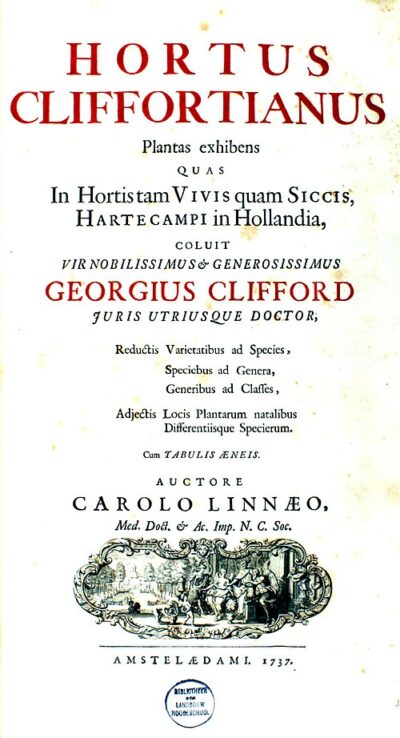
Hortus Cliffortianus is a literary work. It came out in 1738. It was written by Carl Linnaeus.
- Published
- 1738
- Written by
- Carl Linnaeus
- Genre
- natural history
All 6 facts, and where they come from
Facts
6 facts · 0 confirmed by two sources · 0 cited · 6 from one source
Where this comes from
Papalocal keeps its own record. It started from these sources; what each one said is kept here as it was copied, so a change on their side never changes this page by itself. Tap one to read its version.
What Wikidata says · copied November 17, 2026 · revision 2518389732
- Described as
- book
- What it is
- literary work
- Written by
- Carl Linnaeus
- Genre
- natural history
- Published
- 1738
- Language
- Latin
- Named after
- George Clifford III
- Wikipedias with a page
- 15
Wikidata item Q551911 (wikidata.org/wiki/Q551911), public domain (CC0). Copied 2026-11-17.
What Wikipedia says · copied November 17, 2026 · revision 1384746986
The Hortus Cliffortianus is a work of early botanical literature published in 1737.
The work was a collaboration between Carl Linnaeus and the illustrator Georg Dionysius Ehret, financed by George Clifford in 1735–1736. Clifford was a wealthy Amsterdam banker, a governor of the Dutch East India Company, and a keen botanist with a large herbarium. He had the income to attract the talents of botanists such as Linnaeus and artists like Ehret and Jan Wandelaar. Together at the Clifford summer estate Hartecamp, which was located south of Haarlem in Heemstede near Bennebroek, they produced the first scholarly classification of an English garden.
From the Wikipedia article “Hortus Cliffortianus” (en.wikipedia.org/wiki/Hortus_Cliffortianus), by its contributors, under CC BY-SA 4.0 (creativecommons.org/licenses/by-sa/4.0/). Copied 2026-11-17; not changed.
Confirmed Two sources agree. Cited One source, and it names where it got it. One source One source, without a reference of its own. Sources disagree The sources disagree. We show the best-supported value and keep theirs below.
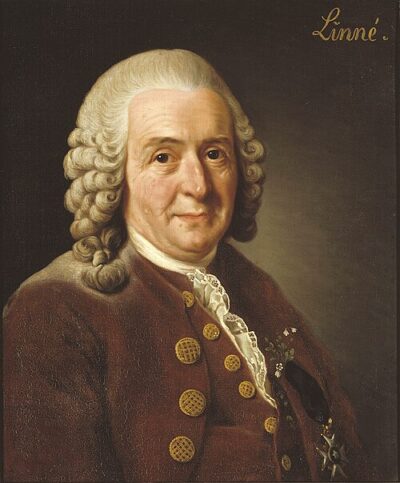
Picture: Carl Linnaeus, via Wikimedia Commons · Public domain