Hundred Flowers Awards
Hundred Flowers Awards is a Chinese film award. It was created in 1962.
- Country
- People's Republic of China
- Created
- 1962
All 3 facts, and where they come from
Facts
3 facts · 0 confirmed by two sources · 0 cited · 3 from one source
Where this comes from
Papalocal keeps its own record. It started from these sources; what each one said is kept here as it was copied, so a change on their side never changes this page by itself. Tap one to read its version.
What Wikidata says · copied November 18, 2026 · revision 2516684690
- Described as
- Chinese film award
- Other names
- Baihua jiang
- What it is
- group of awards
- Created
- 1962
- Country
- People's Republic of China
- Wikipedias with a page
- 15
Wikidata item Q369606 (wikidata.org/wiki/Q369606), public domain (CC0). Copied 2026-11-18.
What Wikipedia says · copied November 18, 2026 · revision 1386199730
The Hundred Flowers Awards (Chinese: 大众电影百花奖; pinyin: Dàzhòng Diànyǐng Bǎihuā Jiǎng) are, together with the Golden Rooster Awards, the most prestigious film awards honouring the best in Chinese cinema, as well as Hong Kong cinema and the Cinema of Taiwan. They are classified as the Chinese equivalent of the United States' Golden Globes.
The awards were inaugurated by China Film Association in 1962 and sponsored by Popular Cinema (大众电影) magazine, which has the largest circulation in mainland China.
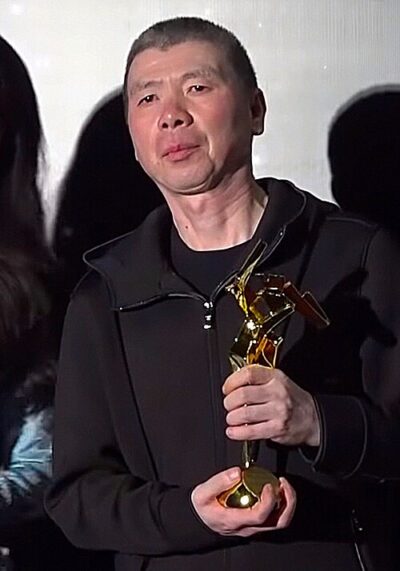
The awards were formerly voted by the readers of Popular Cinema annually. Recent polls allow voters to cast ballots through SMS, the Internet, or by phone call. Voting is now no longer confined to readers of Popular Cinema. Award recipients receive a statuette in the shape of a goddess of Flowers (花神).
From the Wikipedia article “Hundred Flowers Awards” (en.wikipedia.org/wiki/Hundred_Flowers_Awards), by its contributors, under CC BY-SA 4.0 (creativecommons.org/licenses/by-sa/4.0/). Copied 2026-11-18; not changed.
Confirmed Two sources agree. Cited One source, and it names where it got it. One source One source, without a reference of its own. Sources disagree The sources disagree. We show the best-supported value and keep theirs below.