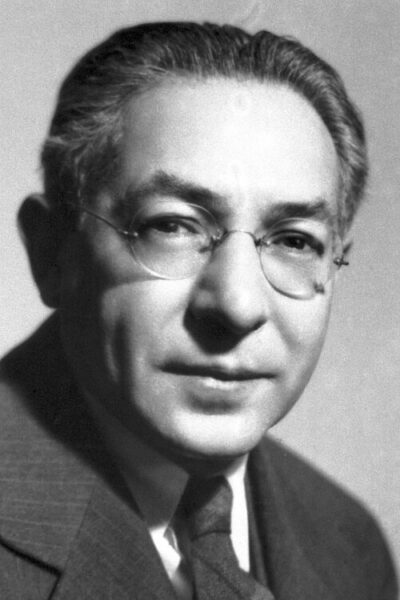
I. I. Rabi Award
I. I. Rabi Award is an American award for contributions in atomic and molecular frequency standards (1983-). It is given by the Institute of Electrical and Electronics Engineers.
- Country
- United States
- Created
- 1983
All 7 facts, and where they come from
Facts
7 facts · 0 confirmed by two sources · 0 cited · 7 from one source
Where this comes from
Papalocal keeps its own record. It started from these sources; what each one said is kept here as it was copied, so a change on their side never changes this page by itself. Tap one to read its version.
What Wikidata says · copied November 16, 2026 · revision 2430629183
- Described as
- American award for contributions in atomic and molecular frequency standards (1983-)
- Other names
- Isidor Isaac Rabi Award, Isidor Isaac Rabi Award (IEEE)
- What it is
- award; science award; physics award
- Created
- 1983
- Country
- United States
- Given by
- Institute of Electrical and Electronics Engineers
- Named after
- Isidor Isaac Rabi
- Wikipedias with a page
- 4
Wikidata item Q18207954 (wikidata.org/wiki/Q18207954), public domain (CC0). Copied 2026-11-16.
What Wikipedia says · copied November 16, 2026 · revision 1329486800
The I. I. Rabi Award, founded in 1983, is awarded annually by IEEE.
"The Rabi Award is to recognize outstanding contributions related to the fields of atomic and molecular frequency standards, and time transfer and dissemination."
The award is named after Isidor Isaac Rabi, Nobel Prize winner in 1944. He was the first recipient of the award, for his experimental and theoretical work on atomic beam resonance spectroscopy.
From the Wikipedia article “I. I. Rabi Award” (en.wikipedia.org/wiki/I._I._Rabi_Award), by its contributors, under CC BY-SA 4.0 (creativecommons.org/licenses/by-sa/4.0/). Copied 2026-11-16; not changed.
Confirmed Two sources agree. Cited One source, and it names where it got it. One source One source, without a reference of its own. Sources disagree The sources disagree. We show the best-supported value and keep theirs below.