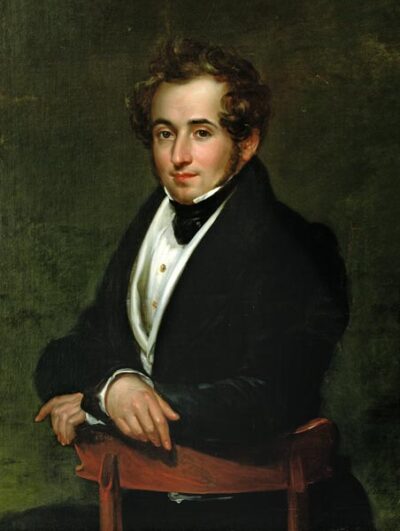
I puritani
I puritani is an opera by Vincenzo Bellini. It is based on Têtes rondes et Cavaliers.
- Released
- 19th century
- Genre
- opera
- Country of origin
- Italy
All 8 facts, and where they come from
Facts
8 facts · 0 confirmed by two sources · 3 cited · 5 from one source
Where this comes from
Papalocal keeps its own record. It started from these sources; what each one said is kept here as it was copied, so a change on their side never changes this page by itself. Tap one to read its version.
What Wikidata says · copied November 17, 2026 · revision 2564423299
- Described as
- opera by Vincenzo Bellini
- What it is
- dramatico-musical work
- Music by
- Vincenzo Bellini · 1 reference
- Screenplay by
- Jacques-François Ancelot · 1 reference
- Genre
- opera · 1 reference
- Released
- 19th century
- Language
- Italian
- Country of origin
- Italy
- Based on
- Têtes rondes et Cavaliers
- Wikipedias with a page
- 28
Wikidata item Q470886 (wikidata.org/wiki/Q470886), public domain (CC0). Copied 2026-11-17.
What Wikipedia says · copied November 17, 2026 · revision 1384062005
I puritani (The Puritans) is an 1835 opera by Vincenzo Bellini. It was originally written in two acts and changed to three acts before the premiere on the advice of Gioachino Rossini, with whom the young composer had become friends. The music was set to a libretto by Count Carlo Pepoli, an Italian émigré poet whom Bellini had met at a salon run by the exile Princess Belgiojoso, which became a meeting place for many Italian revolutionaries. The opera is based on Têtes Rondes et Cavaliers (Roundheads and Cavaliers), a historical play written by Jacques-François Ancelot and Joseph Xavier Saintine and set in the English Civil War. Except for its title, the opera is not in any way based on Walter Scott's 1816 novel Old Mortality (translated into Italian in 1825 as I Puritani di Scozia), despite some claims to the contrary.
When Bellini arrived in Paris in mid-August 1833, he had intended to stay only about three weeks, the main aim being to continue the negotiations with the Paris Opéra which he had begun on his way to London a few months earlier. These negotiations came to nothing, but by October he had decided to spend the winter in Paris, especially as both Il pirata and I Capuleti e i Montecchi were to be given by the Théâtre-Italien that season. The offer from the Théâtre came in January 1834; he accepted because "the pay was richer than what I had received in Italy up to then, though only by a little; then because of so magnificent a company; and finally so as to remain in Paris at others' expense."
Taking from April until its premiere the following January, Bellini had time to ensure that the opera was as close to perfection as possible. After the premiere, Bellini reported to his friend Francesco Florimo in Naples that:The French had all gone mad; there were such noise and such shouts that they themselves were astonished at being so carried away ... In a word, my dear Florimo, it was an unheard of thing, and since Saturday, Paris has spoken of it in amazement
It was to be Bellini's final work; he died in September 1835 at the age of 33.
From the Wikipedia article “I puritani” (en.wikipedia.org/wiki/I_puritani), by its contributors, under CC BY-SA 4.0 (creativecommons.org/licenses/by-sa/4.0/). Copied 2026-11-17; not changed.
Confirmed Two sources agree. Cited One source, and it names where it got it. One source One source, without a reference of its own. Sources disagree The sources disagree. We show the best-supported value and keep theirs below.
Picture: Wikimedia Commons: Luigi Verardi after Dominico Ferri - Vincenzo Bellini - Théatre Royal Italien. Salle d'armes dans l'Opéra I Puritani.jpg · See Commons file page