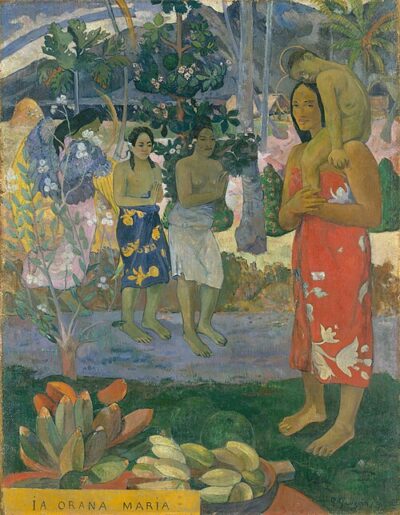
Ia Orana Maria
Ia Orana Maria is a painting by Paul Gauguin. It came out in 1891.
- Came out
- 1891
- Created by
- Paul Gauguin
- Genre
- religious art
All 5 facts, and where they come from
Facts
5 facts · 0 confirmed by two sources · 1 cited · 4 from one source
Where this comes from
Papalocal keeps its own record. It started from these sources; what each one said is kept here as it was copied, so a change on their side never changes this page by itself. Tap one to read its version.
What Wikidata says · copied November 17, 2026 · revision 2563400246
- Described as
- painting by Paul Gauguin
- Other names
- Ave Maria
- What it is
- painting
- Created by
- Paul Gauguin · 1 reference
- Genre
- religious art; genre art
- Came out
- 1891
- Wikipedias with a page
- 15
Wikidata item Q1118465 (wikidata.org/wiki/Q1118465), public domain (CC0). Copied 2026-11-17.
What Wikipedia says · copied November 17, 2026 · revision 1384715557
Ia Orana Maria (Hail Mary) is an 1891 oil-on-canvas painting by the French artist Paul Gauguin, now housed in the Metropolitan Museum of Art in New York. Created shortly after the artist’s arrival in Tahiti, it is considered one of the earliest and most emblematic works of his Tahitian period. In the composition, two Polynesian women greet a Tahitian mother and child, whom Gauguin deliberately reimagines within the Christian framework of the Madonna and Child while situating them in a distinctly local setting. The painting marks Gauguin’s first major attempt to fuse Western religious iconography with what he perceived as the spiritual and visual qualities of Tahitian life, embodying many stylistic themes that would define Gauguin's work in the Pacific.
From the Wikipedia article “Ia Orana Maria” (en.wikipedia.org/wiki/Ia_Orana_Maria), by its contributors, under CC BY-SA 4.0 (creativecommons.org/licenses/by-sa/4.0/). Copied 2026-11-17; not changed.
Confirmed Two sources agree. Cited One source, and it names where it got it. One source One source, without a reference of its own. Sources disagree The sources disagree. We show the best-supported value and keep theirs below.
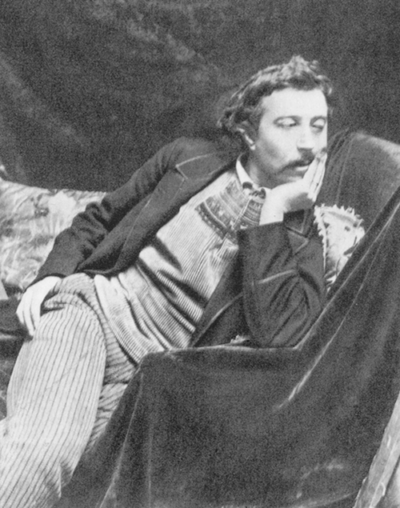
Picture: Paul Gauguin, via Wikimedia Commons · Public domain