
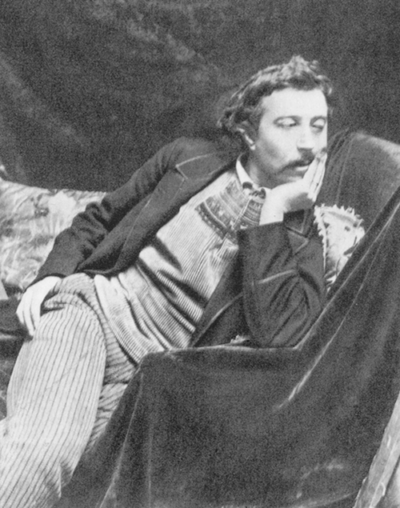
Paul Gauguin
Paul Gauguin was a French painter and printmaker. Born June 7, 1848, in Paris. Died May 8, 1903, in Atuona. Known for The Yellow Christ, Manaò tupapaú and When Will You Marry?. Educated at lycée Pothier.

Facts
47 facts · 2 confirmed by two sources · 21 cited · 24 from one source
Where this comes from
Papalocal keeps its own record. It started from these sources; what each one said is kept here as it was copied, so a change on their side never changes this page by itself. Tap one to read its version.
What Wikidata says · copied November 16, 2026 · revision 2565594625
- Described as
- French painter and printmaker (1848–1903)
- Other names
- Eugene-Henri-Paul Gauguin, Paul Eugène Henri Gauguin, P. gaugin, Eugène-Henri-Paul Gauguin, Kao-keng, Gauguin, Eugene Henri Paul Gauguin, Eugène Henry Paul Gauguin, Paul Eugene Henri Gauguin, gauguin paul, Paul Gaugin, Pablo Gauguin
- Born
- June 7, 1848 · 18 references
- Died
- May 8, 1903 · 5 references
- Born in
- Paris · 3 references
- Died in
- Atuona
- Buried in
- Calvary Cemetery
- Cause of death
- syphilis
- Name at birth
- Eugène Henri Paul Gauguin
- Citizen of
- France · 3 references
- Occupation
- painter · 3 references; sculptor · 3 references; graphic artist · 3 references; draftsperson · 2 references; printmaker · 1 reference; ceramicist · 2 references; illustrator · 2 references; visual artist · 1 reference
- Education
- lycée Pothier
- Genre
- portrait · 2 references; landscape painting · 1 reference; figure · 1 reference; genre art · 1 reference; still life · 1 reference
- Known for
- The Yellow Christ; Manaò tupapaú; When Will You Marry?; Ia Orana Maria; Where Do We Come From? What Are We? Where Are We Going?; Tahitian Women on the Beach; Vincent van Gogh Painting Sunflowers; The Green Christ; Aha Oe Feii?
- Field
- painting · 1 reference; culture of Polynesia; visual arts · 1 reference; Post-impressionism · 1 reference
- Spouse
- Mette Sophie Gad
- Children
- Clovis Gauguin; Jean René Gauguin; Pola Gauguin · 1 reference; Émile Gauguin · 1 reference; Emile Gauguin
- Father
- Clovis Gauguin
- Mother
- Aline Chazal
- Lived in
- Frederiksberg (1884–1885) · 1 reference; Nørregade (1885–) · 1 reference; Paris; Tahiti
- Wikipedias with a page
- 134
Wikidata item Q37693 (wikidata.org/wiki/Q37693), public domain (CC0). Copied November 16, 2026.
What Wikipedia says · copied November 16, 2026 · revision 1383338701
Eugène Henri Paul Gauguin (; French: [øʒɛn ɑ̃ʁi pɔl ɡoɡɛ̃]; 7 June 1848 – 8 May 1903) was a French painter, sculptor, printmaker, ceramist, and writer, whose work has been primarily associated with the Post-Impressionist and Symbolist movements. He was also an influential practitioner of wood engraving and woodcuts as art forms. While only moderately successful during his lifetime, Gauguin has since been recognized for his experimental use of color and Synthetist style that were distinct from Impressionism.
Gauguin was born in Paris in 1848, amidst the tumult of Europe's revolutionary year. In 1850, Gauguin's family settled in Peru, where he experienced a privileged childhood (until the age of six) that left a lasting impression on him. Later, financial struggles led them back to France, where Gauguin received formal education. Initially working as a stockbroker, Gauguin started painting in his spare time, his interest in art kindled by visits to galleries and exhibitions. The financial crisis of 1882 significantly impacted his brokerage career, prompting a shift to full-time painting. Gauguin's art education was largely self-taught and informal, shaped significantly by his associations with other artists rather than academic training. His entry into the art world was facilitated by his acquaintance with Camille Pissarro, a leading Impressionist. Pissarro took on a mentor role for Gauguin, introducing him to other Impressionist artists and techniques.
He exhibited with the Impressionists in the early 1880s, but soon began developing his distinct style, characterized by a bolder use of color and less traditional subject matter. His work in Brittany and Martinique showcased his inclination towards depicting native life and landscapes. By the 1890s, Gauguin's art took a significant turn during his time in Tahiti, then a French colony, where he sought a refuge from Western civilization. Gauguin's later years in Tahiti and the Marquesas Islands were marked by health problems and financial struggles.
His paintings from that period, characterized by vivid colors and Symbolist themes, would prove highly successful among the European viewers for their exploration of the relationships between people, nature, and the spiritual world. Gauguin's art became popular after his death, partially from the efforts of dealer Ambroise Vollard, who organized exhibitions of his work late in his career and assisted in organizing two important posthumous exhibitions in Paris. His work was influential on the French avant-garde and many modern artists, such as Pablo Picasso and Henri Matisse, and he is well known for his relationship with Vincent and Theo van Gogh.
- Born, in its opening lines
- June 7, 1848
- Died, in its opening lines
- May 8, 1903
From the Wikipedia article “Paul Gauguin” (en.wikipedia.org/wiki/Paul_Gauguin), by its contributors, under CC BY-SA 4.0 (creativecommons.org/licenses/by-sa/4.0/). Copied November 16, 2026; not changed.
Confirmed Two sources agree. Cited One source, and it names where it got it. One source One source, without a reference of its own. Sources disagree The sources disagree. We show the best-supported value and keep theirs below.
