In Praise of Folly
In Praise of Folly is a 1509 essay by Desiderius Erasmus. It came out in 1511.
- Published
- 1511
- Came out
- 1511
- Written by
- Erasmus
- Genre
- satire
All 7 facts, and where they come from
Facts
7 facts · 0 confirmed by two sources · 0 cited · 7 from one source
Where this comes from
Papalocal keeps its own record. It started from these sources; what each one said is kept here as it was copied, so a change on their side never changes this page by itself. Tap one to read its version.
What Wikidata says · copied November 17, 2026 · revision 2534191860
- Described as
- 1509 essay by Desiderius Erasmus
- Other names
- In Praise of More, The Praise of Folly, Moriae Encomium, Stultitiae Laus
- What it is
- literary work
- Written by
- Erasmus
- Genre
- satire · 1 reference
- Published
- 1511
- Language
- renaissance Latin
- Comes after
- Handbook of a Christian Knight · 1 reference
- Came out
- 1511 · 1 reference
- Wikipedias with a page
- 53
Wikidata item Q569869 (wikidata.org/wiki/Q569869), public domain (CC0). Copied 2026-11-17.
What Wikipedia says · copied November 17, 2026 · revision 1384745920
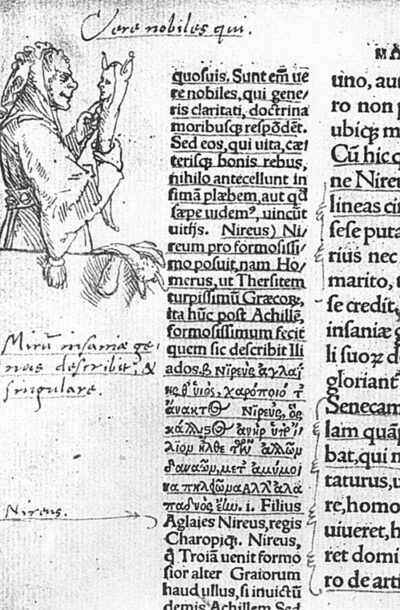
In Praise of Folly, also translated as The Praise of Folly (Latin: Stultitiae Laus or Moriae Encomium), is an oration written in Latin in 1509 by Desiderius Erasmus of Rotterdam and first printed in June 1511. Inspired by previous works of the Italian humanist Faustino Perisauli's De Triumpho Stultitiae, it is a spiralling satirical attack on all aspects of human life, not ignoring superstitions and religious corruption, but with a pivot into an orthodox religious purpose.
Erasmus revised and extended his work, which, he claims, was originally written in the span of a week while sojourning with Sir Thomas More at More's house in Bucklersbury in the City of London. The title Moriae Encomium had a punning second meaning as In Praise of More (in Greek μωρία translates into "folly"). In Praise of Folly is considered one of the most notable works of the Renaissance and played an important role in the beginnings of the Protestant Reformation.
From the Wikipedia article “In Praise of Folly” (en.wikipedia.org/wiki/In_Praise_of_Folly), by its contributors, under CC BY-SA 4.0 (creativecommons.org/licenses/by-sa/4.0/). Copied 2026-11-17; not changed.
Confirmed Two sources agree. Cited One source, and it names where it got it. One source One source, without a reference of its own. Sources disagree The sources disagree. We show the best-supported value and keep theirs below.
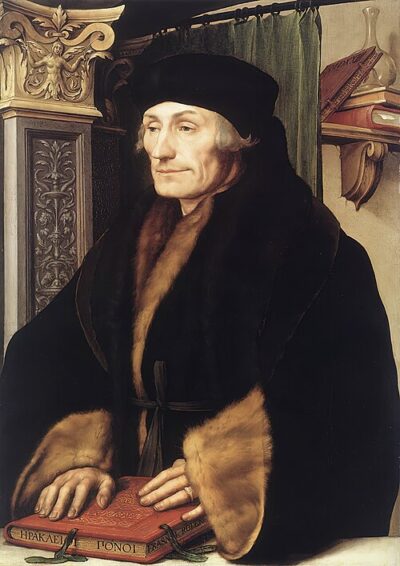
Picture: Hans Holbein the Younger, via Wikimedia Commons · Public domain