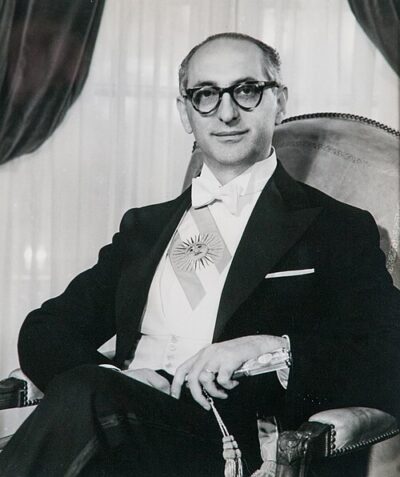
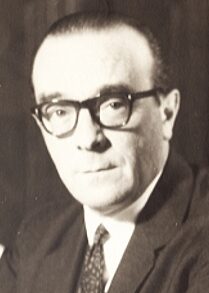
Intransigent Radical Civic Union
The Intransigent Radical Civic Union is a political party. It was founded in 1957. Its headquarters are in Buenos Aires. It stands for developmentalism, classical radicalism and civic nationalism.
- Country
- Argentina
- Founded
- 1957
- Ideology
- developmentalism
- Chair
- Arturo Frondizi
All 11 facts, and where they come from
Facts
11 facts · 0 confirmed by two sources · 0 cited · 11 from one source
Where this comes from
Papalocal keeps its own record. It started from these sources; what each one said is kept here as it was copied, so a change on their side never changes this page by itself. Tap one to read its version.
What Wikidata says · copied November 17, 2026 · revision 2334399228
- Described as
- political party
- What it is
- political party
- Founded
- 1957
- Ended
- 1972
- Headquarters
- Buenos Aires
- Country
- Argentina
- Chair
- Arturo Frondizi · 1 reference; Oscar Alende · 1 reference
- Ideology
- developmentalism; classical radicalism · 1 reference; civic nationalism · 1 reference; social liberalism · 1 reference
- Wikipedias with a page
- 5
Wikidata item Q833748 (wikidata.org/wiki/Q833748), public domain (CC0). Copied 2026-11-17.
What Wikipedia says · copied November 17, 2026 · revision 1291785244
The Intransigent Radical Civic Union (Spanish: Unión Cívica Radical Intransigente, UCRI) was a political party of Argentina.
The UCRI developed from the centrist Radical Civic Union (UCR) in 1956, following a split at the party's convention in Tucumán between the UCR's progressive faction, led by Arturo Frondizi, and its conservative faction, led by Ricardo Balbín, which renamed itself "People's Radical Civic Union" (Spanish: Unión Cívica Radical del Pueblo, UCRP). Receiving the endorsement of the exiled populist leader Juan Perón four days before the February 1958 general elections, UCRI presidential candidate Frondizi defeated UCRP presidential candidate Balbín by 17% and the party enjoyed a narrow majority in Congress. Following President Frondizi's forced resignation at the hands of the military, who objected to his political concessions towards Peronism and his close relations with Cuba, the UCRI President of the Senate, José María Guido, was appointed President of Argentina. A proposed Popular Front uniting banned Peronists, the UCRI and others dissolved ahead of the July 1963 general elections, when Buenos Aires Province Governor Oscar Alende developed objections to the inclusion of conservatives in the alliance. Frondizi, others in the UCRI and Perón instructed their supporters to cast blank ballots, leading to their highest incidence in the history of Argentine national elections. Governor Alende ran on the UCRI, but was unable to overcome the boycott, leading him to narrowly lose to UCRP candidate Arturo Illia, who was considered more centrist than Balbín. Afterwards, Frondizi and his chief economist while in office, Rogelio Julio Frigerio, left the UCRI in August to establish the Integration and Development Movement (MID), whose platform centered on economic growth.
In 1972, following discussions between dictator Alejandro Agustín Lanusse and Balbín looking to allow general elections in 1973, but at the same time avoid a Peronist victory, the military government officially awarded the name "Radical Civic Union" to the UCRP, forcing the UCRI to dissolve itself, after which a majority of UCRI affiliates (including Alende) founded the Intransigent Party as a continuation, while a minority joined the MID.
From the Wikipedia article “Intransigent Radical Civic Union” (en.wikipedia.org/wiki/Intransigent_Radical_Civic_Union), by its contributors, under CC BY-SA 4.0 (creativecommons.org/licenses/by-sa/4.0/). Copied 2026-11-17; not changed.
Confirmed Two sources agree. Cited One source, and it names where it got it. One source One source, without a reference of its own. Sources disagree The sources disagree. We show the best-supported value and keep theirs below.