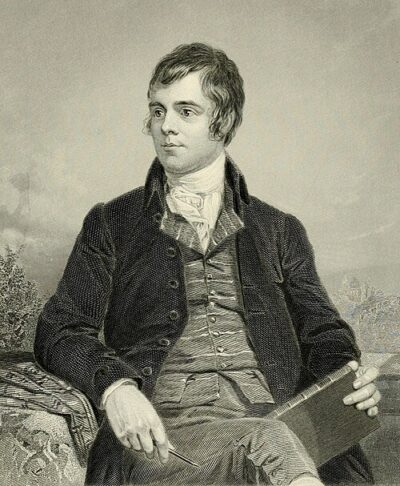
Is There for Honest Poverty
Is There for Honest Poverty is a 1795 song by Robert Burns.
- Written by
- Robert Burns
All 2 facts, and where they come from
Facts
2 facts · 0 confirmed by two sources · 0 cited · 2 from one source
Where this comes from
Papalocal keeps its own record. It started from these sources; what each one said is kept here as it was copied, so a change on their side never changes this page by itself. Tap one to read its version.
What Wikidata says · copied November 17, 2026 · revision 2469067572
- Described as
- 1795 song by Robert Burns
- Other names
- A Man's a Man for A' That, For a' That and a' That
- What it is
- work
- Written by
- Robert Burns
- Wikipedias with a page
- 12
Wikidata item Q1814155 (wikidata.org/wiki/Q1814155), public domain (CC0). Copied 2026-11-17.
What Wikipedia says · copied November 17, 2026 · revision 1341357736
"A Man's a Man for A' That" is a song by Scottish poet Robert Burns, famous for its expression of egalitarianism.
The song made its first appearance in a letter Burns wrote to George Thomson in January 1795. It was subsequently published anonymously in the August edition of the Glasgow Magazine, a radical monthly. Thomson later included it in the fourth volume of his Select Collection of Original Scottish Airs, giving it the title "The Honest Man the Best of Men".
Scottish folksinger Sheena Wellington sang the song at the opening of the Scottish Parliament in May 1999. Midge Ure did the same in July 2016. The song was also sung at the funeral of Donald Dewar, the inaugural First Minister of Scotland. "Trotz alledem", a German translation of the song written by Ferdinand Freiligrath, was widely used during the Revolutions of 1848.
The words "pride o' worth" appear on the crest of the Scottish Qualifications Authority.
From the Wikipedia article “A Man's a Man for A' That” (en.wikipedia.org/wiki/A_Man's_a_Man_for_A'_That), by its contributors, under CC BY-SA 4.0 (creativecommons.org/licenses/by-sa/4.0/). Copied 2026-11-17; not changed.
Confirmed Two sources agree. Cited One source, and it names where it got it. One source One source, without a reference of its own. Sources disagree The sources disagree. We show the best-supported value and keep theirs below.