
Janata Party
The Janata Party is a political party in India, active 1977–2013.
- Country
- India
- Founded
- 1977
- Chair
- Morarji Desai
All 5 facts, and where they come from
Facts
5 facts · 0 confirmed by two sources · 0 cited · 5 from one source
Where this comes from
Papalocal keeps its own record. It started from these sources; what each one said is kept here as it was copied, so a change on their side never changes this page by itself. Tap one to read its version.
What Wikidata says · copied November 17, 2026 · revision 2499600403
- Described as
- political party in India, active 1977–2013
- Other names
- People's Party (India)
- What it is
- political party
- Founded
- 1977
- Ended
- 2013
- Country
- India
- Chair
- Morarji Desai
- Wikipedias with a page
- 30
Wikidata item Q2352638 (wikidata.org/wiki/Q2352638), public domain (CC0). Copied 2026-11-17.
What Wikipedia says · copied November 17, 2026 · revision 1371558221
The Janata Party (JP, lit. 'People's Party') is an unrecognised political party in India. Navneet Chaturvedi is the current president of the party since November 2021, replacing Jai Prakash Bandhu.
The JP was established as an amalgam of Indian political parties opposed to the Emergency that was imposed between 1975 and 1977 by Prime Minister Indira Gandhi of the Indian National Congress (R). They included the conservative Indian National Congress (Organisation), the Hindu-nationalist Bharatiya Jana Sangh, the liberal to social-democratic Bharatiya Lok Dal (formed in 1974 by the merger of the conservative-liberal Swatantra Party, the conservative Bharatiya Kranti Dal, the Samyukta Socialist Party and the Utkal Congress) and the Socialist Party, as well as later defectors from the Indian National Congress.
Raj Narain, a Socialist, had filed a legal writ alleging electoral malpractice against Indira Gandhi in 1971. On 12 June 1975, Allahabad High Court found her guilty of using corrupt electoral practices in her 1971 election victory over Narain in the Rae Bareli constituency. She was barred from contesting any election for the next six years. Economic problems, corruption and the conviction of Gandhi led to widespread protests against the government, which responded by imposing a State of Emergency. The rationale was that of preserving national security. However, the government introduced press censorship, postponed elections and banned strikes and rallies. Opposition leaders such as Narain, J. B. Kripalani, Jayaprakash Narayan, Anantram Jaiswal, Chandra Shekhar, Biju Patnaik, Atal Bihari Vajpayee, L. K. Advani, Satyendra Narayan Sinha, Ramnandan Mishra and Morarji Desai were imprisoned, along with thousands of other political activists. When the Emergency was lifted and a new election called in 1977, opposition leaders joined to form the JP. In the 1977 general election, the party defeated the Congress (R) and JP leader Morarji Desai became the first non-Congress prime minister in independent modern India's history. Narain defeated Gandhi at Rae Bareli in that election. The new JP-led government reversed many Emergency-era decrees and opened official investigations into Emergency-era abuses. Although several major foreign policy and economic reforms were attempted, continuous in-fighting and ideological differences made the Janata government unable to effectively address national problems. In July 1979 Desai was forced to resign and was replaced by Charan Singh. Popular disenchantment with the political infighting and ineffective government led to the resurgence of Gandhi and her new Indian National Congress (I) party.
JP's success was short-lived and, in the 1980 general election, the Congress (I) was returned to power. JP's heterogeneous nature led to its fragmentation. The first major split occurred in July 1979 when Narain formed his own social-democratic Janata Party (Secular). Shortly after the 1980 election, Hindu nationalists regrouped in the Bharatiya Janata Party, meant as a successor to the Bharatiya Jana Sangh. In 1980 the Janata Party (Secular) was merged into the Lokdal, which would finally merge into the larger Janata Dal, which led the government in 1989–1991 and later experienced a fragmentation similar to JP's. Direct or indirect spliter parties of the Janata Dal, some of which regional, have included the socialist Samata Party, the Samajwadi Janata Party (Rashtriya) or Janata Dal (Socialist), the Janata Dal (United), the Janata Dal (Secular), the socialist Samajwadi Party, the Rashtriya Janata Dal, the Biju Janata Dal and the Rashtriya Lok Dal.
From the Wikipedia article “Janata Party” (en.wikipedia.org/wiki/Janata_Party), by its contributors, under CC BY-SA 4.0 (creativecommons.org/licenses/by-sa/4.0/). Copied 2026-11-17; not changed.
Confirmed Two sources agree. Cited One source, and it names where it got it. One source One source, without a reference of its own. Sources disagree The sources disagree. We show the best-supported value and keep theirs below.
People connected 7
Party members
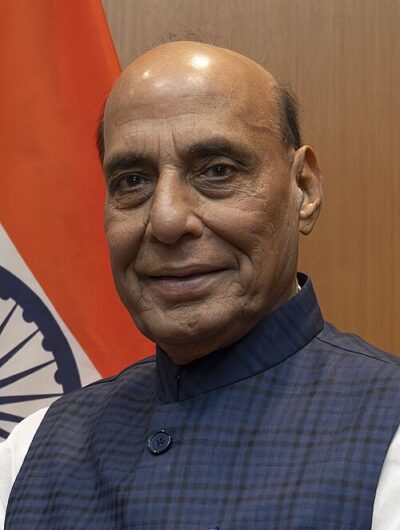 Rajnath Singh (1977–1980)Indian politician
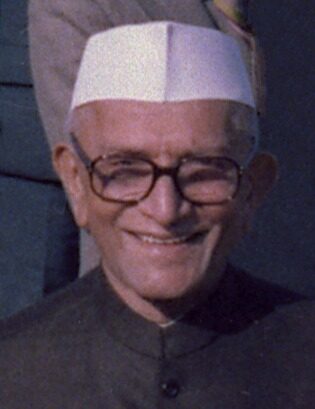 Morarji Desai (1969–)Prime Minister of India (1977-1979)
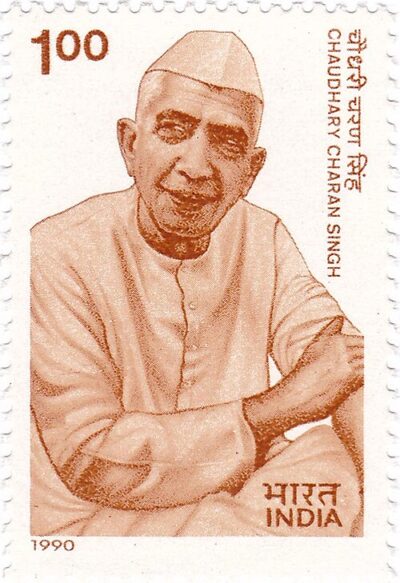 Charan SinghPrime Minister of India (1979-1980)
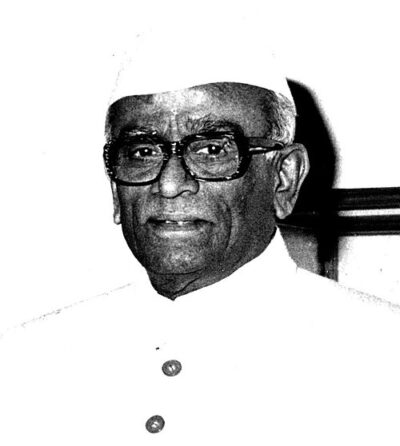 Neelam Sanjiva Reddy (1977–1996)Sixth President of India (1913-1996)
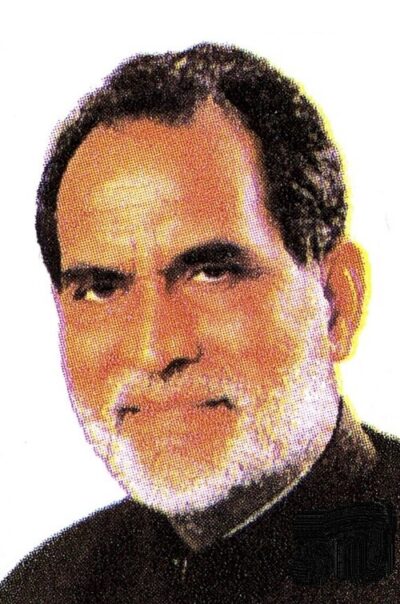 Chandra Shekhar (1977–1988)Prime Minister of India (1990-1991)
 L. K. AdvaniDeputy Prime Minister of India (2002-2004)
 Jayaprakash NarayanIndian independence activist and political leader
