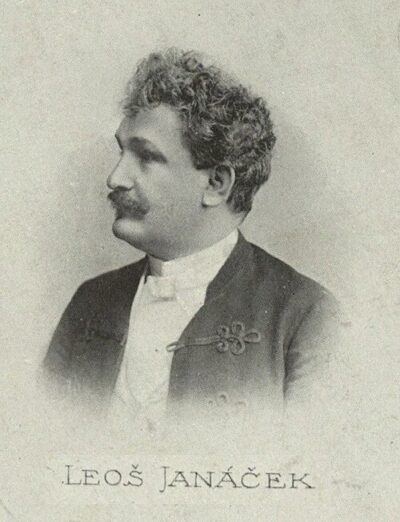
Jenůfa
Jenůfa is an opera by Leoš Janáček. It came out in 1903.
- Released
- 20th century
- Came out
- 1903 (1896–1903)
All 5 facts, and where they come from
Facts
5 facts · 0 confirmed by two sources · 0 cited · 5 from one source
Where this comes from
Papalocal keeps its own record. It started from these sources; what each one said is kept here as it was copied, so a change on their side never changes this page by itself. Tap one to read its version.
What Wikidata says · copied November 17, 2026 · revision 2564423823
- Described as
- opera by Leoš Janáček
- Other names
- Její pastorkyňa
- What it is
- dramatico-musical work
- Music by
- Leoš Janáček
- Released
- 20th century
- Language
- Czech
- Came out
- 1903 (1896–1903)
- Wikipedias with a page
- 23
Wikidata item Q1196783 (wikidata.org/wiki/Q1196783), public domain (CC0). Copied 2026-11-17.
What Wikipedia says · copied November 17, 2026 · revision 1376701041
Její pastorkyňa (Her Stepdaughter; commonly known as Jenůfa ()) is an opera in three acts by Leoš Janáček to a Czech libretto by the composer, based on the play Její pastorkyňa by Gabriela Preissová. It was first performed at the National Theatre, Brno on 21 January 1904. Composed between 1896 and 1902, it is among the first operas written in prose.
The first of Janáček's operas in which his distinctive voice can clearly be heard, it is a grim story of infanticide and redemption. Like the playwright's original work, it is known for its unsentimental realism. While today it is heard in the composer's original version, Jenůfa's early popularity was due to a revised version by Karel Kovařovic, altering what was considered its eccentric style and orchestration. Thus altered, it was well-received, first in Prague, and particularly after its Vienna première also worldwide. More than 70 years passed before audiences again heard it in Janáček's original version.
Janáček wrote an overture to the opera, but decided not to use it. It was partly based on a song called Žárlivec (The jealous man). It is now performed as a concert piece under the title Žárlivost (Jealousy), JW 6/10.
The composer dedicated the work to the memory of his daughter Olga (d. 1903), as he did his choral composition the Elegy on the Death of Daughter Olga.
From the Wikipedia article “Jenůfa” (en.wikipedia.org/wiki/Jenůfa), by its contributors, under CC BY-SA 4.0 (creativecommons.org/licenses/by-sa/4.0/). Copied 2026-11-17; not changed.
Confirmed Two sources agree. Cited One source, and it names where it got it. One source One source, without a reference of its own. Sources disagree The sources disagree. We show the best-supported value and keep theirs below.
Picture: Wikimedia Commons: Jenufa.jpg · See Commons file page