Journey to the End of the Night
Journey to the End of the Night is a 1932 novel by Louis-Ferdinand Céline. It won the Le Monde's 100 Books of the Century.
- Published
- 1932
- Written by
- Louis-Ferdinand Céline
- Genre
- autobiography
- Country of origin
- France
All 9 facts, and where they come from
Facts
9 facts · 0 confirmed by two sources · 0 cited · 9 from one source
Where this comes from
Papalocal keeps its own record. It started from these sources; what each one said is kept here as it was copied, so a change on their side never changes this page by itself. Tap one to read its version.
What Wikidata says · copied November 17, 2026 · revision 2501971698
- Described as
- 1932 novel by Louis-Ferdinand Céline
- Other names
- Voyage au bout de la nuit, Journey to the End of Night
- What it is
- literary work
- Written by
- Louis-Ferdinand Céline
- Publisher
- Éditions Denoël
- Genre
- autobiography; military fiction
- Published
- 1932
- Language
- French
- Country of origin
- France
- Awards
- Le Monde's 100 Books of the Century
- Wikipedias with a page
- 48
Wikidata item Q774233 (wikidata.org/wiki/Q774233), public domain (CC0). Copied 2026-11-17.
What Wikipedia says · copied November 17, 2026 · revision 1384248083
Journey to the End of the Night (French: Voyage au bout de la nuit, 1932) is the first novel by Louis-Ferdinand Céline. This semi-autobiographical work follows the adventures of Ferdinand Bardamu in World War I, colonial Africa, the United States and the poor suburbs of Paris where he works as a doctor.
The novel won the Prix Renaudot in 1932 but divided critics due to the author's pessimistic depiction of the human condition and his innovative writing style based on working class speech, slang and neologisms. It is now widely considered to be one of the greatest novels of the twentieth century.
From the Wikipedia article “Journey to the End of the Night” (en.wikipedia.org/wiki/Journey_to_the_End_of_the_Night), by its contributors, under CC BY-SA 4.0 (creativecommons.org/licenses/by-sa/4.0/). Copied 2026-11-17; not changed.
Confirmed Two sources agree. Cited One source, and it names where it got it. One source One source, without a reference of its own. Sources disagree The sources disagree. We show the best-supported value and keep theirs below.
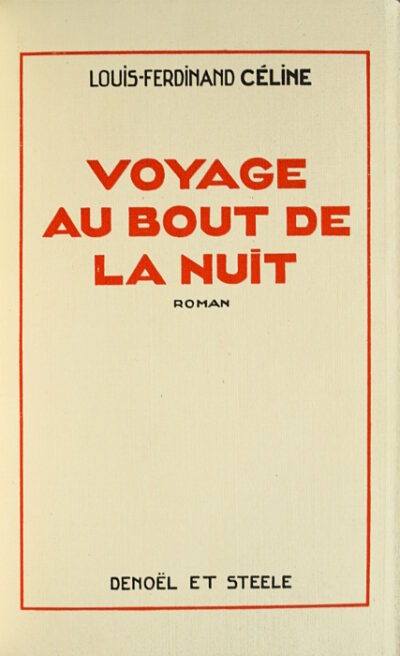
Picture: Éditions Denoël et Steele, via Wikimedia Commons · Public domain