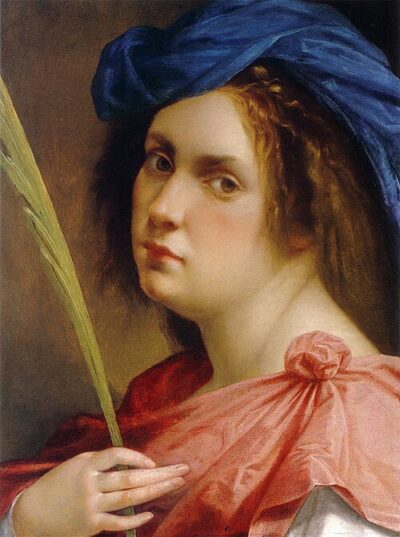
Judith and Her Maidservant
Judith and Her Maidservant is a painting by Artemisia Gentileschi in the Galleria Palatina.
- Came out
- 1610s
- Created by
- Artemisia Gentileschi
- Genre
- religious art
All 5 facts, and where they come from
Facts
5 facts · 0 confirmed by two sources · 1 cited · 4 from one source
Where this comes from
Papalocal keeps its own record. It started from these sources; what each one said is kept here as it was copied, so a change on their side never changes this page by itself. Tap one to read its version.
What Wikidata says · copied November 17, 2026 · revision 2569898626
- Described as
- painting by Artemisia Gentileschi in the Galleria Palatina
- Other names
- Judith, Judith and her Maidservant
- What it is
- painting · 1 reference
- Created by
- Artemisia Gentileschi
- Genre
- religious art
- Came out
- 1610s · 1 reference; 1610s · 1 reference
- Country
- Italy
- Wikipedias with a page
- 18
Wikidata item Q532486 (wikidata.org/wiki/Q532486), public domain (CC0). Copied 2026-11-17.
What Wikipedia says · copied November 17, 2026 · revision 1292128635
Judith and her Maidservant is a c. 1615 painting by the Italian baroque artist Artemisia Gentileschi. The painting depicts Judith and her maidservant leaving the scene where they have just beheaded general Holofernes, whose head is in the basket carried by the maidservant. It hangs in the Pitti Palace, Florence.
From the Wikipedia article “Judith and Her Maidservant (Artemisia Gentileschi, Florence)” (en.wikipedia.org/wiki/Judith_and_Her_Maidservant_(Artemisia_Gentileschi,_Florence)), by its contributors, under CC BY-SA 4.0 (creativecommons.org/licenses/by-sa/4.0/). Copied 2026-11-17; not changed.
Confirmed Two sources agree. Cited One source, and it names where it got it. One source One source, without a reference of its own. Sources disagree The sources disagree. We show the best-supported value and keep theirs below.
Picture: Wikimedia Commons: Gentileschi judith1.jpg · See Commons file page