
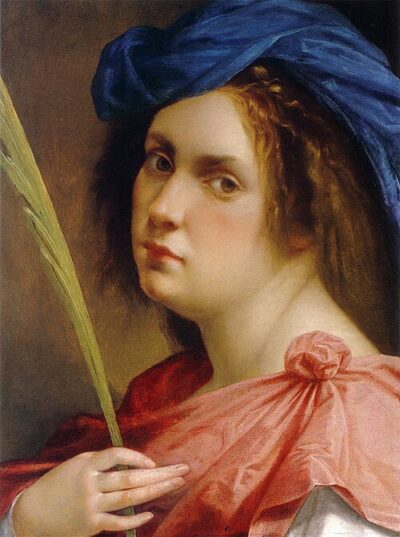
Artemisia Gentileschi
Artemisia Gentileschi was an Italian Baroque painter. Born July 8, 1593, in Rome. Died 1653, in Naples. Positions held include court painter. Known for Judith Slaying Holofernes, Adoration of the Magi and Judith and Her Maidservant.
Facts
27 facts · 1 confirmed by two sources · 11 cited · 14 from one source · 1 where the sources disagree
What’s different
- Died: we show 1653 (Sources disagree). Wikipedia says January 1654
Where this comes from
Papalocal keeps its own record. It started from these sources; what each one said is kept here as it was copied, so a change on their side never changes this page by itself. Tap one to read its version.
What Wikidata says · copied November 16, 2026 · revision 2570106467
- Described as
- Italian Baroque painter (1593-1651)
- Other names
- Artemissa del Gentileschy, Artemisia Lomi, Artemitia, Gentilesca, Artemizia Gentilesca, Artimisi, Artemisia, Artemisia Gentilesca, Artemiggia, Artemisia Gentileschi Lomi, Artemiscia Gentoleschi, Artemisia del Gentileschi
- Born
- July 8, 1593 · 5 references
- Died
- 1653 · 3 references
- Born in
- Rome · 3 references
- Died in
- Naples · 3 references
- Buried in
- San Giovanni Battista dei Fiorentini
- Citizen of
- Papal States
- Occupation
- painter · 3 references; artist · 1 reference
- Positions held
- court painter
- Member of
- Accademia delle Arti del Disegno (1616) · 1 reference
- Genre
- portrait · 2 references; religious painting · 2 references; history painting · 1 reference; mythological painting · 1 reference
- Known for
- Judith Slaying Holofernes; Adoration of the Magi; Judith and Her Maidservant; Susanna and the Elders; Allegory of Inclination · 1 reference; Self-Portrait as a Female Martyr; Susanna and the Elders · 1 reference
- Field
- painting · 1 reference
- Spouse
- Pierantonio Stiattesi
- Father
- Orazio Gentileschi
- Mother
- Prudenzia di Ottaviano Montoni · 1 reference
- Siblings
- Francesco Gentileschi · 1 reference
- Religion
- Catholicism
- Wikipedias with a page
- 78
Wikidata item Q212657 (wikidata.org/wiki/Q212657), public domain (CC0). Copied November 16, 2026.
What Wikipedia says · copied November 16, 2026 · revision 1380920014
Artemisia Lomi Gentileschi (US: JEN-til-ESK-ee, -teel-; Italian: [arteˈmiːzja ˈlɔːmi dʒentiˈleski]; 8 July 1593 – after January 1654) was an Italian Baroque painter. Gentileschi is considered among the most accomplished 17th-century artists, initially working in the style of Caravaggio. She was producing professional work by the age of 15. In an era when women had few opportunities to pursue artistic training or work as professional artists, Gentileschi was the first woman to become a member of the Accademia di Arte del Disegno in Florence and she had an international clientele. Gentileschi worked as an expatriate painter in the court of Charles I of England from 1638 to 1642, but she is thought to have fled the country in the early phases of the English Civil War. Her whereabouts over the following years are unknown, but she resurfaced in Naples during 1649. Her last known letter to one of her mentors was dated to 1650 and it indicates that she was still working as an artist. Her time of death is disputed, but her last known commission was in January 1654.
Many of Gentileschi's paintings feature women from myths, allegories, and the Bible, including victims, suicides, and warriors. Some of her best-known subjects are Susanna and the Elders (particularly the 1610 version, in Schloss Weißenstein, Pommersfelden), Judith Slaying Holofernes (her 1614–1620 version is in the Uffizi gallery), and Judith and Her Maidservant (her 1625 work is in the Detroit Institute of Arts).Gentileschi was known for being able to depict the female figure with great naturalism and for her skill in handling colour to express dimension and drama.
Her achievements as an artist were long overshadowed by the story of her rape at around 18 years old by Agostino Tassi and her being tortured to give evidence during his subsequent trial. For many years Gentileschi was regarded as a curiosity, but her life and art have been reexamined by scholars in the 20th and 21st centuries, with the recognition of her talents exemplified by major exhibitions at internationally esteemed fine art institutions, such as the National Gallery in London.
- Born, in its opening lines
- July 8, 1593
- Died, in its opening lines
- January 1654
From the Wikipedia article “Artemisia Gentileschi” (en.wikipedia.org/wiki/Artemisia_Gentileschi), by its contributors, under CC BY-SA 4.0 (creativecommons.org/licenses/by-sa/4.0/). Copied November 16, 2026; not changed.
Confirmed Two sources agree. Cited One source, and it names where it got it. One source One source, without a reference of its own. Sources disagree The sources disagree. We show the best-supported value and keep theirs below.
