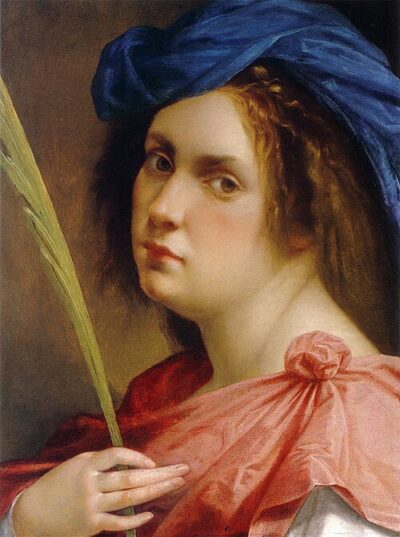
Judith Slaying Holofernes
Judith Slaying Holofernes is a painting by Artemisia Gentileschi. It came out in 1613. It is based on Book of Judith.
- Came out
- 1613
- Created by
- Artemisia Gentileschi
- Genre
- religious art
All 5 facts, and where they come from
Facts
5 facts · 0 confirmed by two sources · 0 cited · 5 from one source
Where this comes from
Papalocal keeps its own record. It started from these sources; what each one said is kept here as it was copied, so a change on their side never changes this page by itself. Tap one to read its version.
What Wikidata says · copied November 17, 2026 · revision 2570453955
- Described as
- painting by Artemisia Gentileschi
- Other names
- Judith Beheading Holofernes
- What it is
- painting · 1 reference
- Created by
- Artemisia Gentileschi
- Genre
- religious art
- Based on
- Book of Judith
- Came out
- 1613
- Wikipedias with a page
- 25
Wikidata item Q2247406 (wikidata.org/wiki/Q2247406), public domain (CC0). Copied 2026-11-17.
What Wikipedia says · copied November 17, 2026 · revision 1367563198
Judith Slaying Holofernes is a painting by the Italian early Baroque artist Artemisia Gentileschi, completed in 1612–13 and now at the Museo Capodimonte, Naples, Italy.
The picture is considered one of her iconic works. The canvas shows Judith beheading Holofernes. The subject takes an episode from the deuterocanonical Book of Judith in the Old Testament, which recounts the assassination of the Assyrian general Holofernes by the Israelite heroine Judith. The painting shows the moment when Judith, helped by her maidservant Abra, beheads the general after he has fallen asleep in a drunken stupor. The composition places Judith on the right side of the canvas, actively restraining Holofernes while performing the beheading, while Abra assists from behind by holding the figure in place. The scene is tightly structured and emphasizes physical immediacy through close spatial framing. Gentileschi employs strong chiaroscuro, with dramatic contrasts between light and shadow that highlight the figures and intensify the sense of action. The lighting draws attention to the movement and effort involved in the scene, while the surrounding darkness focuses attention on the central figures and the violent act being depicted. She painted a second version (now in the Uffizi, Florence) somewhere between 1613 and 1621.
Early feminist critics interpreted the painting as a form of visual revenge following Gentileschi's rape by Agostino Tassi in 1611; similarly many other art historians see the painting in the context of her achievement in portraying strong women.
From the Wikipedia article “Judith Slaying Holofernes (Artemisia Gentileschi, Naples)” (en.wikipedia.org/wiki/Judith_Slaying_Holofernes_(Artemisia_Gentileschi,_Naples)), by its contributors, under CC BY-SA 4.0 (creativecommons.org/licenses/by-sa/4.0/). Copied 2026-11-17; not changed.
Confirmed Two sources agree. Cited One source, and it names where it got it. One source One source, without a reference of its own. Sources disagree The sources disagree. We show the best-supported value and keep theirs below.
Picture: Wikimedia Commons: Artemisia Gentileschi - Judith Beheading Holofernes - WGA8563.jpg · See Commons file page