Kelvin–Varley divider
Kelvin–Varley divider is an electronic circuit used to divide voltages.
All 2 facts, and where they come from
Facts
2 facts · 0 confirmed by two sources · 0 cited · 2 from one source
Where this comes from
Papalocal keeps its own record. It started from these sources; what each one said is kept here as it was copied, so a change on their side never changes this page by itself. Tap one to read its version.
What Wikidata says · copied November 17, 2026 · revision 2391219923
- Described as
- electronic circuit used to divide voltages
- Other names
- Kelvin-Varley voltage divider
- Named after
- William Thomson, 1st Baron Kelvin; C. F. Varley
- Wikipedias with a page
- 4
Wikidata item Q1738404 (wikidata.org/wiki/Q1738404), public domain (CC0). Copied 2026-11-17.
What Wikipedia says · copied November 17, 2026 · revision 1332606384
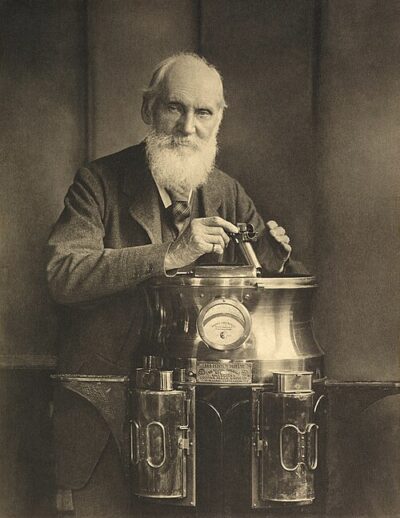
The Kelvin-Varley voltage divider, named after its inventors William Thomson, 1st Baron Kelvin and Cromwell Fleetwood Varley, is a precision voltage divider circuit used to generate an output voltage as a highly accurate ratio of an input voltage, with selectable resolution over several decades. The concept of multi-decade resistor networks for precise voltage and resistance ratio adjustment was developed in the late 19th century as part of the evolution of electrical resistance measurement techniques. Unlike a simple resistive divider, it employs cascaded stages of matched resistor networks to achieve very high linearity and ratio accuracy, and is typically operated in conjunction with a sensitive null detector. In this role, the Kelvin–Varley divider functions as an electromechanical precision digital-to-analog converter for voltage ratio values.
The circuit is used in calibration and metrology laboratories as primary or reference voltage ratio standards, forming part of measurement chains that compare unknown voltages to known standards with minimal dependence on detector calibration. Commercial Kelvin-Varley dividers can achieve resolution, accuracy and linearity of 0.1 ppm (1 in 10 million).
From the Wikipedia article “Kelvin–Varley divider” (en.wikipedia.org/wiki/Kelvin–Varley_divider), by its contributors, under CC BY-SA 4.0 (creativecommons.org/licenses/by-sa/4.0/). Copied 2026-11-17; not changed.
Confirmed Two sources agree. Cited One source, and it names where it got it. One source One source, without a reference of its own. Sources disagree The sources disagree. We show the best-supported value and keep theirs below.