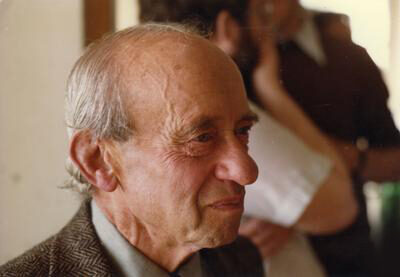
Knaster–Tarski theorem
Knaster–Tarski theorem is a theorem in order and lattice theory.
All 1 facts, and where they come from
Facts
1 facts · 0 confirmed by two sources · 0 cited · 1 from one source
Where this comes from
Papalocal keeps its own record. It started from these sources; what each one said is kept here as it was copied, so a change on their side never changes this page by itself. Tap one to read its version.
What Wikidata says · copied November 16, 2026 · revision 2398124380
- Described as
- theorem in order and lattice theory
- What it is
- fixed-point theorem
- Wikipedias with a page
- 11
Wikidata item Q609612 (wikidata.org/wiki/Q609612), public domain (CC0). Copied 2026-11-16.
What Wikipedia says · copied November 16, 2026 · revision 1374393767
In the mathematical areas of order and lattice theory, the Knaster–Tarski theorem, named after Bronisław Knaster and Alfred Tarski, states the following:
Let (L, ≤) be a complete lattice and let f : L → L be an order-preserving (monotonic) function with respect to ≤. Then the set of fixed points of f in L forms a complete lattice under ≤.
It was Tarski who stated the result in its most general form, and so the theorem is often known as Tarski's fixed-point theorem. Some time earlier, Knaster and Tarski established the result for the special case where L is the lattice of subsets of a set, the power set lattice.
The theorem has important applications in formal semantics of programming languages and abstract interpretation, as well as in game theory. It is the logical bedrock for defining the meaning of recursive or repetitive processes in computer science and for proving the existence of equilibrium states in fields like game theory. It essentially proves that when a system follows simple, non-decreasing rules, a stable, self-consistent outcome is always guaranteed to exist.
A kind of converse of this theorem was proved by Anne C. Davis: If every order-preserving function f : L → L on a lattice L has a fixed point, then L is a complete lattice.
From the Wikipedia article “Knaster–Tarski theorem” (en.wikipedia.org/wiki/Knaster–Tarski_theorem), by its contributors, under CC BY-SA 4.0 (creativecommons.org/licenses/by-sa/4.0/). Copied 2026-11-16; not changed.
Confirmed Two sources agree. Cited One source, and it names where it got it. One source One source, without a reference of its own. Sources disagree The sources disagree. We show the best-supported value and keep theirs below.