Koch's postulates
Koch's postulates is a four criteria showing a causal relationship between a causative microbe and a disease.
All 2 facts, and where they come from
Facts
2 facts · 0 confirmed by two sources · 0 cited · 2 from one source
Where this comes from
Papalocal keeps its own record. It started from these sources; what each one said is kept here as it was copied, so a change on their side never changes this page by itself. Tap one to read its version.
What Wikidata says · copied November 17, 2026 · revision 2551117081
- Described as
- four criteria showing a causal relationship between a causative microbe and a disease
- What it is
- postulate
- Named after
- Robert Koch
- Wikipedias with a page
- 40
Wikidata item Q19047 (wikidata.org/wiki/Q19047), public domain (CC0). Copied 2026-11-17.
What Wikipedia says · copied November 17, 2026 · revision 1378543488
Koch's postulates ( KOKH) are four criteria designed to establish a causal relationship between a microbe and a disease. The postulates were formulated by Robert Koch and Friedrich Loeffler in 1884, based on earlier concepts described by Jakob Henle, and the statements were refined and published by Koch in 1890. Koch applied the postulates to describe the etiology of cholera and tuberculosis, both of which are now ascribed to bacteria. The postulates have been controversially generalized to other diseases. More modern concepts in microbial pathogenesis cannot be examined using Koch's postulates, including viruses (which are obligate intracellular parasites) and asymptomatic carriers. They have largely been supplanted by other criteria such as the Bradford Hill criteria for infectious disease causality in modern public health and molecular Koch's postulates for microbial pathogenesis. Modified Koch's postulates also have been proposed for infectious proteins such as prions.
From the Wikipedia article “Koch's postulates” (en.wikipedia.org/wiki/Koch's_postulates), by its contributors, under CC BY-SA 4.0 (creativecommons.org/licenses/by-sa/4.0/). Copied 2026-11-17; not changed.
Confirmed Two sources agree. Cited One source, and it names where it got it. One source One source, without a reference of its own. Sources disagree The sources disagree. We show the best-supported value and keep theirs below.
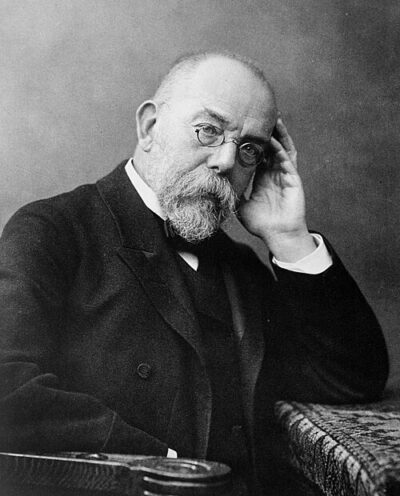
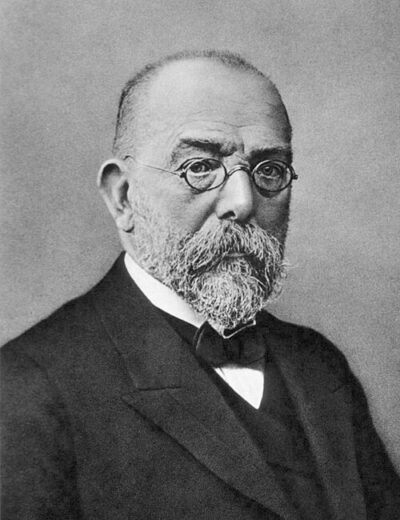
Picture: Unknown author, via Wikimedia Commons · Public domain