Korean Patriotic Organization
The Korean Patriotic Organization is an organization. It was founded in 1931.
- Founded
- 1931
All 2 facts, and where they come from
Facts
2 facts · 0 confirmed by two sources · 0 cited · 2 from one source
Where this comes from
Papalocal keeps its own record. It started from these sources; what each one said is kept here as it was copied, so a change on their side never changes this page by itself. Tap one to read its version.
What Wikidata says · copied November 17, 2026 · revision 2464173161
- Described as
- organization
- What it is
- organization
- Founded
- 1931 · 1 reference
- Wikipedias with a page
- 7
Wikidata item Q11663966 (wikidata.org/wiki/Q11663966), public domain (CC0). Copied 2026-11-17.
What Wikipedia says · copied November 17, 2026 · revision 1360677455
The Korean Patriotic Organization (Korean: 한인애국단) was a militant organization under the Korean Provisional Government (KPG) and founded in Shanghai, China in 1931. It aimed to assassinate military and government leaders of the Empire of Japan. The group also went by the name Ŭisaenggun.
Most notably, the group was behind a nearly successful assassination attempt on Emperor Hirohito in January 1932 and a successful attack in Hongkou Park (now Lu Xun Park) in April 1932. After May 1932, the group largely stopped its activities and disbanded.
The organization ultimately improved the relationship between the KPG and the Republic of China government, although it provoked a crackdown on KPG activities from the Japanese.
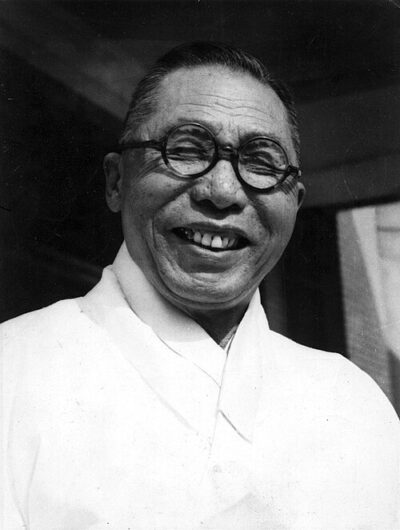
It was founded and led by Kim Ku, a prominent member of the Korean independence movement. Its executives were Kim Suk, An Gong-geun, Lee Su-bong, and Lee Yu-pil. Notable members included Yun Bong-gil, Lee Bong-chang, Lee Deok-ju, and Choi Heung-sik.
From the Wikipedia article “Korean Patriotic Organization” (en.wikipedia.org/wiki/Korean_Patriotic_Organization), by its contributors, under CC BY-SA 4.0 (creativecommons.org/licenses/by-sa/4.0/). Copied 2026-11-17; not changed.
Confirmed Two sources agree. Cited One source, and it names where it got it. One source One source, without a reference of its own. Sources disagree The sources disagree. We show the best-supported value and keep theirs below.