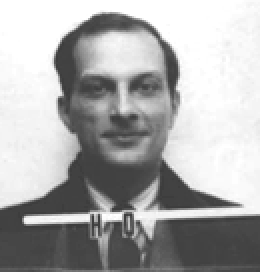
Kuratowski–Ulam theorem
Kuratowski–Ulam theorem is an analog of Fubini's theorem for arbitrary second countable Baire spaces.
All 3 facts, and where they come from
Facts
3 facts · 0 confirmed by two sources · 0 cited · 3 from one source
Where this comes from
Papalocal keeps its own record. It started from these sources; what each one said is kept here as it was copied, so a change on their side never changes this page by itself. Tap one to read its version.
What Wikidata says · copied November 16, 2026 · revision 2398124679
- Described as
- analog of Fubini's theorem for arbitrary second countable Baire spaces
- What it is
- theorem
- Named after
- Stanisław Ulam; Kazimierz Kuratowski
- Wikipedias with a page
- 1
Wikidata item Q19597641 (wikidata.org/wiki/Q19597641), public domain (CC0). Copied 2026-11-16.
What Wikipedia says · copied November 16, 2026 · revision 1045357720
In mathematics, the Kuratowski–Ulam theorem, introduced by Kazimierz Kuratowski and Stanislaw Ulam (1932), called also the Fubini theorem for category, is an analog of Fubini's theorem for arbitrary second countable Baire spaces.
Let X and Y be second countable Baire spaces (or, in particular, Polish spaces), and let A⊂X×Y. Then the following are equivalent if A has the Baire property:A is meager (respectively comeager).
The set {x∈X:Ax is meager (resp. comeager) in Y} is comeager in X, where Ax=πY[A∩{x}×Y], where πY is the projection onto Y.
Even if A does not have the Baire property, 2. follows from 1.
Note that the theorem still holds (perhaps vacuously) for X an arbitrary Hausdorff space and Y a Hausdorff space with countable π-base.
The theorem is analogous to the regular Fubini's theorem for the case where the considered function is a characteristic function of a subset in a product space, with the usual correspondences, namely, meagre set with a set of measure zero, comeagre set with one of full measure, and a set with the Baire property with a measurable set.
From the Wikipedia article “Kuratowski–Ulam theorem” (en.wikipedia.org/wiki/Kuratowski–Ulam_theorem), by its contributors, under CC BY-SA 4.0 (creativecommons.org/licenses/by-sa/4.0/). Copied 2026-11-16; not changed.
Confirmed Two sources agree. Cited One source, and it names where it got it. One source One source, without a reference of its own. Sources disagree The sources disagree. We show the best-supported value and keep theirs below.