
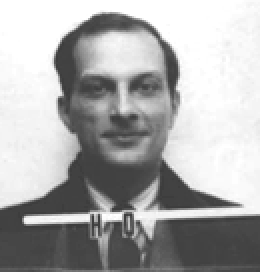
Stanisław Ulam
Stanisław Ulam was a Polish-American mathematician. Born April 13, 1909, in Lviv. Died May 13, 1984, in Santa Fe. Known for Borsuk–Ulam theorem, Kuratowski–Ulam theorem and Mazur–Ulam theorem. Educated at Lviv Polytechnic. Awards include John von Neumann Prize and Commander with Star of the Order of Polonia Restituta.
Facts
44 facts · 2 confirmed by two sources · 21 cited · 21 from one source
Where this comes from
Papalocal keeps its own record. It started from these sources; what each one said is kept here as it was copied, so a change on their side never changes this page by itself. Tap one to read its version.
What Wikidata says · copied November 13, 2026 · revision 2555579803
- Described as
- Polish-American mathematician (1909–1984)
- Other names
- Stanislaw Ulam, Stanisław Marcin Ulam
- Born
- April 13, 1909 · 2 references
- Died
- May 13, 1984 · 6 references
- Born in
- Lviv · 1 reference
- Died in
- Santa Fe · 1 reference
- Buried in
- Montparnasse Cemetery · 1 reference
- Cause of death
- myocardial infarction
- Name at birth
- Stanisław Marcin Ulam
- Citizen of
- United States (1943–) · 1 reference; Kingdom of Galicia and Lodomeria; Second Polish Republic (1918–1939)
- Occupation
- mathematician · 2 references; university teacher; physicist · 1 reference; writer · 1 reference; scientist · 1 reference
- Worked for
- Harvard University (1935–1940) · 1 reference; University of Wisconsin–Madison (1940–1943) · 1 reference; University of Florida (1974–1984) · 1 reference; University of Colorado Boulder (1965–1975) · 2 references; Los Alamos National Laboratory (1943–1965) · 1 reference; Institute for Advanced Study (1935) · 1 reference
- Education
- Lviv Polytechnic (1927–1933) · 1 reference
- Member of
- American Academy of Arts and Sciences; National Academy of Sciences; American Philosophical Society (1967–)
- Known for
- Borsuk–Ulam theorem; Kuratowski–Ulam theorem; Mazur–Ulam theorem; Hyers–Ulam–Rassias stability; Ulam spiral; Collatz sequence; Ulam's packing conjecture; Ulam's game; Ulam matrix; Ulam number
- Awards
- John von Neumann Prize; Commander with Star of the Order of Polonia Restituta · 1 reference
- Field
- mathematics · 1 reference; applied mathematics · 1 reference; Monte Carlo method · 1 reference; physics · 1 reference; nuclear weapon · 1 reference
- Spouse
- Francoise Ulam · 1 reference
- Siblings
- Adam Ulam
- Wikipedias with a page
- 62
Wikidata item Q234357 (wikidata.org/wiki/Q234357), public domain (CC0). Copied November 13, 2026.
What Wikipedia says · copied November 13, 2026 · revision 1374512209
Stanisław Marcin Ulam (Polish: [sta'ɲiswaf 'mart͡ɕin 'ulam]; 13 April 1909 – 13 May 1984) was a Polish-American mathematician who made important contributions in advancing the understanding of nuclear physics and computer science. He participated in the Manhattan Project, originated the Teller–Ulam design of thermonuclear weapons, recognised the concept of the cellular automaton, invented the Monte Carlo method of computation, and championed nuclear pulse propulsion. In pure and applied mathematics, he proved a number of theorems and proposed several conjectures.
Born into a wealthy Polish Jewish family in Lemberg, Austria-Hungary, Ulam studied mathematics at the Lwów Polytechnic Institute, where he earned his PhD in 1933 under the supervision of Kazimierz Kuratowski and Włodzimierz Stożek. In 1935, John von Neumann, whom Ulam had met in Warsaw, invited him to come to the Institute for Advanced Study in Princeton, New Jersey, for a few months. From 1936 to 1939, he spent summers in Poland and academic years at Harvard University in Cambridge, Massachusetts, where he worked to establish important results regarding ergodic theory. On 20 August 1939, he sailed for the United States for the last time with his 17-year-old brother Adam Ulam. He became an assistant professor at the University of Wisconsin–Madison in 1940, and a United States citizen in 1941.
In October 1943, he received an invitation from Hans Bethe to join the Manhattan Project at the secret Los Alamos Laboratory in New Mexico. There, he worked on the hydrodynamic calculations to predict the behavior of the explosive lenses that were needed by an implosion-type weapon. He was assigned to Edward Teller's group, where he worked on Teller's "Super" bomb for Teller and Enrico Fermi. After the war he left to become an associate professor at the University of Southern California, but returned to Los Alamos in 1946 to work on thermonuclear weapons. With the aid of a cadre of female "computers" he found that Teller's "Super" design was unworkable. In January 1951, Ulam and Teller came up with the Teller–Ulam design, which became the basis for all thermonuclear weapons.
Ulam considered the problem of nuclear propulsion of rockets, which was pursued by Project Rover, and proposed, as an alternative to Rover's nuclear thermal rocket, to harness small nuclear explosions for propulsion, which became Project Orion. With Fermi, John Pasta, and Mary Tsingou, Ulam studied the Fermi–Pasta–Ulam–Tsingou problem, which became the inspiration for the field of nonlinear science. He is probably best known for realizing that electronic computers made it practical to apply statistical methods to functions without known solutions, and as computers have developed, the Monte Carlo method has become a common and standard approach to many problems.
- Born, in its opening lines
- April 13, 1909
- Died, in its opening lines
- May 13, 1984
From the Wikipedia article “Stanisław Ulam” (en.wikipedia.org/wiki/Stanisław_Ulam), by its contributors, under CC BY-SA 4.0 (creativecommons.org/licenses/by-sa/4.0/). Copied November 13, 2026; not changed.
Confirmed Two sources agree. Cited One source, and it names where it got it. One source One source, without a reference of its own. Sources disagree The sources disagree. We show the best-supported value and keep theirs below.
