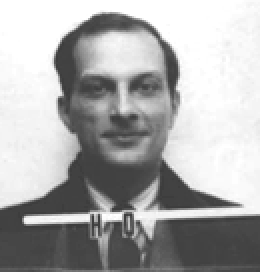
Ulam's packing conjecture
Ulam's packing conjecture is a conjecture about the highest possible packing density of identical convex solids in three-dimensional Euclidean space.
All 2 facts, and where they come from
Facts
2 facts · 0 confirmed by two sources · 0 cited · 2 from one source
Where this comes from
Papalocal keeps its own record. It started from these sources; what each one said is kept here as it was copied, so a change on their side never changes this page by itself. Tap one to read its version.
What Wikidata says · copied November 16, 2026 · revision 2569343291
- Described as
- conjecture about the highest possible packing density of identical convex solids in three-dimensional Euclidean space
- What it is
- conjecture
- Named after
- Stanisław Ulam
- Wikipedias with a page
- 3
Wikidata item Q18356153 (wikidata.org/wiki/Q18356153), public domain (CC0). Copied 2026-11-16.
What Wikipedia says · copied November 16, 2026 · revision 1314754857
Ulam's packing conjecture, named for Stanisław Ulam, is a conjecture about the highest possible packing density of identical convex solids in three-dimensional Euclidean space. The conjecture says that the optimal density for packing congruent spheres is smaller than that for any other convex body. That is, according to the conjecture, the ball is the convex solid which forces the largest fraction of space to remain empty in its optimal packing structure. This conjecture is therefore related to the Kepler conjecture about sphere packing. Since the solution to the Kepler conjecture establishes that identical balls must leave ≈25.95% of the space empty, Ulam's conjecture is equivalent to the statement that no other convex solid forces that much space to be left empty.
From the Wikipedia article “Ulam's packing conjecture” (en.wikipedia.org/wiki/Ulam's_packing_conjecture), by its contributors, under CC BY-SA 4.0 (creativecommons.org/licenses/by-sa/4.0/). Copied 2026-11-16; not changed.
Confirmed Two sources agree. Cited One source, and it names where it got it. One source One source, without a reference of its own. Sources disagree The sources disagree. We show the best-supported value and keep theirs below.