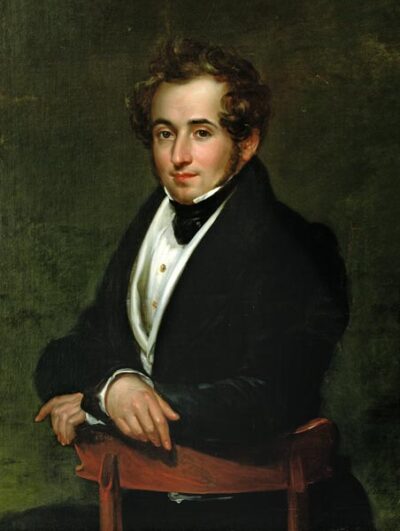
La sonnambula
La sonnambula is an opera by Vincenzo Bellini. It is based on La somnambule, ou L'arrivée d'un nouveau seigneur.
- Released
- 19th century
- Genre
- opera semiseria
- Country of origin
- Italy
All 9 facts, and where they come from
Facts
9 facts · 0 confirmed by two sources · 4 cited · 5 from one source
Where this comes from
Papalocal keeps its own record. It started from these sources; what each one said is kept here as it was copied, so a change on their side never changes this page by itself. Tap one to read its version.
What Wikidata says · copied November 17, 2026 · revision 2564423379
- Described as
- opera by Vincenzo Bellini
- Other names
- The Sleepwalkeress, Sleepwalkeress, Sonnambula
- What it is
- dramatico-musical work · 1 reference
- Music by
- Vincenzo Bellini · 2 references
- Screenplay by
- Eugène Scribe · 1 reference
- Genre
- opera semiseria; opera · 1 reference
- Released
- 19th century
- Language
- Italian
- Country of origin
- Italy
- Based on
- La somnambule, ou L'arrivée d'un nouveau seigneur
- Wikipedias with a page
- 30
Wikidata item Q753123 (wikidata.org/wiki/Q753123), public domain (CC0). Copied 2026-11-17.
What Wikipedia says · copied November 17, 2026 · revision 1384877967
La sonnambula (Italian pronunciation: [la sonˈnambula]; The Sleepwalker) is an opera semiseria in two acts, with music in the bel canto tradition by Vincenzo Bellini set to an Italian libretto by Felice Romani, based on a scenario for a ballet-pantomime written by Eugène Scribe and choreographed by Jean-Pierre Aumer called La somnambule, ou L'arrivée d'un nouveau seigneur. The ballet had premiered in Paris in September 1827 at the height of a fashion for stage works incorporating somnambulism.
The role of Amina was originally written for the soprano sfogato Giuditta Pasta, but during Bellini's lifetime another soprano sfogato, Maria Malibran, was a notable exponent of the role. The first performance took place at the Teatro Carcano in Milan on 6 March 1831.
The majority of twentieth-century recordings have been made with a soprano cast as Amina, usually with added top-notes and other changes according to tradition, although it was written for the soprano sfogato voice (not be confused with the modern mezzo, nonexistent at the time) who sang soprano and contralto roles unmodified.
The phrase Ah! non credea mirarti / Sì presto estinto, o fiore [I did not believe I would see you fade so soon, oh flower] from Amina's final aria is inscribed on Bellini's tomb in the Catania Cathedral in Sicily.
From the Wikipedia article “La sonnambula” (en.wikipedia.org/wiki/La_sonnambula), by its contributors, under CC BY-SA 4.0 (creativecommons.org/licenses/by-sa/4.0/). Copied 2026-11-17; not changed.
Confirmed Two sources agree. Cited One source, and it names where it got it. One source One source, without a reference of its own. Sources disagree The sources disagree. We show the best-supported value and keep theirs below.
Picture: Wikimedia Commons: Disegno per copertina di libretto, disegno di Peter Hoffer per La sonnambula (1954) - Archivio Storico Ricordi ICON012419.jpg · See Commons file page