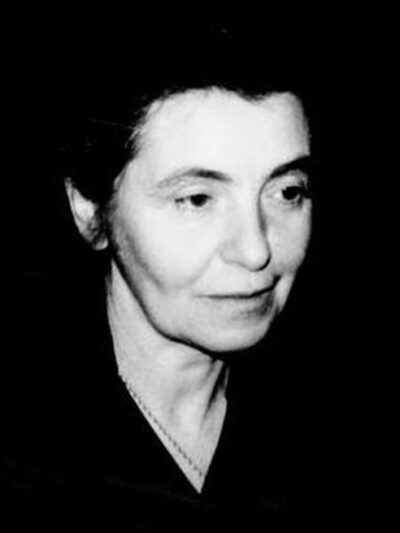
Ladyzhenskaya's inequality
Ladyzhenskaya's inequality is a functional inequalities.
All 2 facts, and where they come from
Facts
2 facts · 0 confirmed by two sources · 0 cited · 2 from one source
Where this comes from
Papalocal keeps its own record. It started from these sources; what each one said is kept here as it was copied, so a change on their side never changes this page by itself. Tap one to read its version.
What Wikidata says · copied November 17, 2026 · revision 2398124756
- Described as
- functional inequalities
- What it is
- theorem
- Named after
- Olga Ladyzhenskaya
- Wikipedias with a page
- 2
Wikidata item Q6470834 (wikidata.org/wiki/Q6470834), public domain (CC0). Copied 2026-11-17.
What Wikipedia says · copied November 17, 2026 · revision 1374580609
In mathematics, Ladyzhenskaya's inequality is any of a number of related functional inequalities named after the Soviet Russian mathematician Olga Aleksandrovna Ladyzhenskaya. The original such inequality, for functions of two real variables, was introduced by Ladyzhenskaya in 1958 to prove the existence and uniqueness of long-time solutions to the Navier–Stokes equations in two spatial dimensions (for smooth enough initial data). There is an analogous inequality for functions of three real variables, but the exponents are slightly different; much of the difficulty in establishing existence and uniqueness of solutions to the three-dimensional Navier–Stokes equations stems from these different exponents. Ladyzhenskaya's inequality is one member of a broad class of inequalities known as interpolation inequalities.
Let Ω be a Lipschitz domain in ℝn for n=2 or 3 and let u:Ω→ℝ be a weakly differentiable function that vanishes on the boundary of Ω in the sense of trace (that is, u is a limit in the Sobolev space H1(Ω) of a sequence of smooth functions that are compactly supported in Ω). Then there exists a constant C depending only on Ω such that, in the case n=2:‖u‖L4≤C‖u‖L21/2‖∇u‖L21/2
and in the case n=3:‖u‖L4≤C‖u‖L21/4‖∇u‖L23/4
From the Wikipedia article “Ladyzhenskaya's inequality” (en.wikipedia.org/wiki/Ladyzhenskaya's_inequality), by its contributors, under CC BY-SA 4.0 (creativecommons.org/licenses/by-sa/4.0/). Copied 2026-11-17; not changed.
Confirmed Two sources agree. Cited One source, and it names where it got it. One source One source, without a reference of its own. Sources disagree The sources disagree. We show the best-supported value and keep theirs below.