Lama
Lama is a honorific title for a teacher of the Dharma in Tibetan Buddhism.
All 2 facts, and where they come from
Facts
2 facts · 0 confirmed by two sources · 0 cited · 2 from one source
Where this comes from
Papalocal keeps its own record. It started from these sources; what each one said is kept here as it was copied, so a change on their side never changes this page by itself. Tap one to read its version.
What Wikidata says · copied November 18, 2026 · revision 2567791065
- Described as
- honorific title for a teacher of the Dharma in Tibetan Buddhism
- Other names
- луа, lama
- What it is
- religious role; honorific prefix
- Wikipedias with a page
- 61
Wikidata item Q191421 (wikidata.org/wiki/Q191421), public domain (CC0). Copied 2026-11-18.
What Wikipedia says · copied November 18, 2026 · revision 1368455702
Lama (Tibetan: བླ་མ་, Wylie: bla-ma) is a title bestowed to a realized practitioner of the Dharma in Tibetan Buddhism. Not all monks are lamas, while nuns and female practitioners can be recognized and entitled as lamas. The Tibetan word la-ma means "high mother", and reflects the qualities of the person who is called a lama.
Historically and currently, the term is bestowed on venerated spiritual masters and may be part of a specific lineage title such as the Dalai Lama and the Panchen Lama, lineages of reincarnate high Tulkus.
The title has wrongly applied to all ordained monks and Bhikshus due to misunderstandings by western scholars such as Melvyn Goldstein, the term lama has recently been erroneously applied to Tibetan monks in general. Similarly, Tibetan Buddhism was erroneously referred to as "Lamaism" and "Lamaist" by Goldstein and early western scholars, and by European travelers who did not understand that what they were witnessing was Tibetan Buddhism. The term Lamaism is now considered by some to be derogatory.
In the Vajrayana of Tibetan Buddhism, a lama can be a tantric spiritual guide, or a guru to an aspiring Buddhist student, or a yogi or yogini. As such, the lama/guru can be seen as one of the Three Roots, a variant of the Three Jewels, alongside the yidam the dakini. The dharmapala are protector deities.
According to specific lineages, the mind of the lama is considered the Buddha – one's highest potential; the lama's speech is dharma; and the lama's body is one's guide and companion on the way to enlightenment -the sangha. This means that the lama/guru is the perfect embodiment of the Three Jewels. Another expression of a lama can be expressed through the three Kayas.
From the Wikipedia article “Lama” (en.wikipedia.org/wiki/Lama), by its contributors, under CC BY-SA 4.0 (creativecommons.org/licenses/by-sa/4.0/). Copied 2026-11-18; not changed.
Confirmed Two sources agree. Cited One source, and it names where it got it. One source One source, without a reference of its own. Sources disagree The sources disagree. We show the best-supported value and keep theirs below.
Picture: Wikimedia Commons: Lama debating.jpg · See Commons file page
People connected 6
Occupation
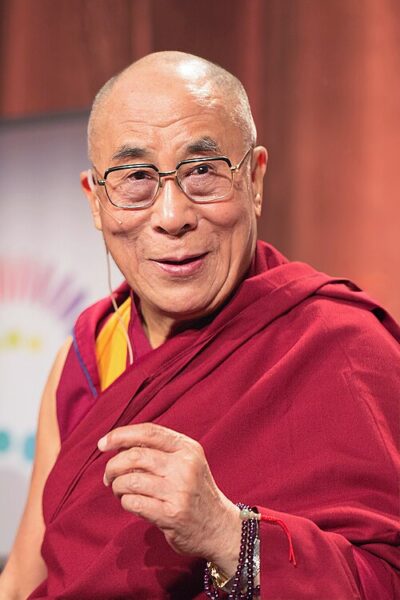 Tenzin Gyatso14th Dalai Lama, the spiritual and temporal leader of Tibetans
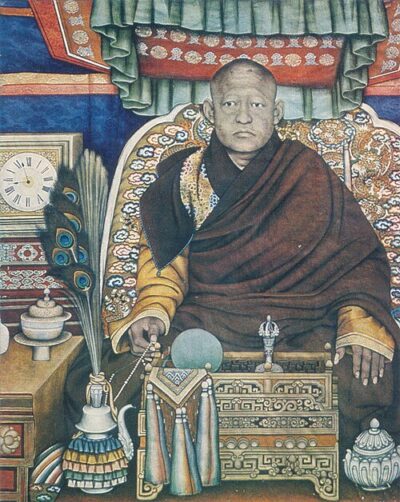 Bogd KhanGreat Khan of Outer Mongolia (1869–1924)
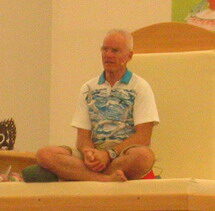 Ole NydahlDanish lama
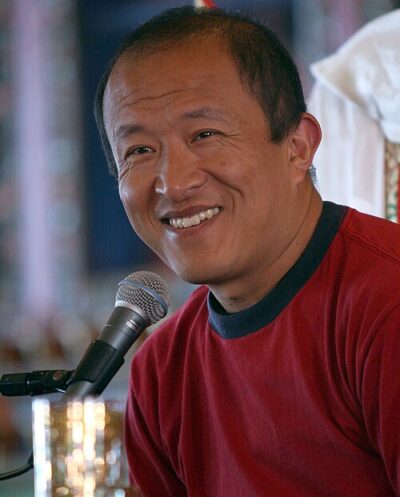 Dzongsar Jamyang Khyentse RinpocheBuddhist master, writer and filmmaker