Laocoön
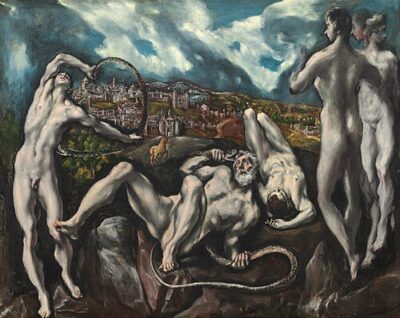
Laocoön is a painting by El Greco.
- Came out
- 1610s
- Created by
- El Greco
- Genre
- mythological painting
All 5 facts, and where they come from
Facts
5 facts · 0 confirmed by two sources · 1 cited · 4 from one source
Where this comes from
Papalocal keeps its own record. It started from these sources; what each one said is kept here as it was copied, so a change on their side never changes this page by itself. Tap one to read its version.
What Wikidata says · copied November 17, 2026 · revision 2568906429
- Described as
- painting by El Greco
- What it is
- painting
- Created by
- El Greco
- Genre
- mythological painting
- Came out
- 1610s · 1 reference
- Country
- United States
- Wikipedias with a page
- 17
Wikidata item Q2255224 (wikidata.org/wiki/Q2255224), public domain (CC0). Copied 2026-11-17.
What Wikipedia says · copied November 17, 2026 · revision 1378629534
The Laocoön is an oil painting created between 1610 and 1614 by Greek painter El Greco. It is part of a collection at the National Gallery of Art in Washington, D.C.
The painting depicts the Greek and Roman mythological story of the deaths of Laocoön, a Trojan priest of Poseidon, and his two sons Antiphantes and Thymbraeus. Laocoön and his sons were strangled by sea serpents, a punishment sent by the gods after Laocoön attempted to warn his countrymen about the Trojan horse. Although inspired by the recently discovered monumental Hellenistic sculpture Laocoön and His Sons in Rome, Laocoön is a product of Mannerism, an artistic movement originating in Italy during the 16th century that countered the artistic ideals of the Renaissance. El Greco's painting deliberately breaks away from the balance and harmony of Renaissance art with its strong emotional atmosphere and distorted figures.
From the Wikipedia article “Laocoön (El Greco)” (en.wikipedia.org/wiki/Laocoön_(El_Greco)), by its contributors, under CC BY-SA 4.0 (creativecommons.org/licenses/by-sa/4.0/). Copied 2026-11-17; not changed.
Confirmed Two sources agree. Cited One source, and it names where it got it. One source One source, without a reference of its own. Sources disagree The sources disagree. We show the best-supported value and keep theirs below.
Picture: El Greco, via Wikimedia Commons · Public domain