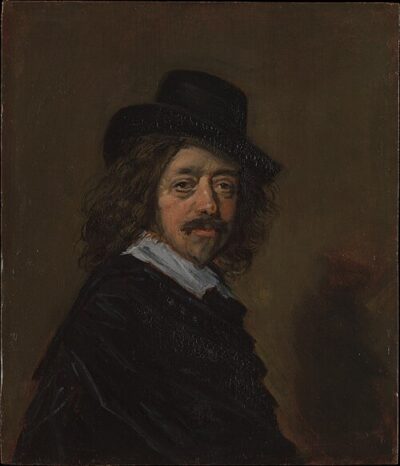
Laughing Cavalier
Laughing Cavalier is a painting of a gentleman by Frans Hals, probably Tieleman Roosterman, Wallace Collection. It came out in 1624.
- Came out
- 1624
- Created by
- Frans Hals
- Genre
- portrait
All 6 facts, and where they come from
Facts
6 facts · 0 confirmed by two sources · 3 cited · 3 from one source
Where this comes from
Papalocal keeps its own record. It started from these sources; what each one said is kept here as it was copied, so a change on their side never changes this page by itself. Tap one to read its version.
What Wikidata says · copied November 17, 2026 · revision 2569929354
- Described as
- painting of a gentleman by Frans Hals, probably Tieleman Roosterman, Wallace Collection
- Other names
- The Laughing Cavalier
- What it is
- painting · 1 reference
- Created by
- Frans Hals
- Genre
- portrait · 1 reference
- Came out
- 1624
- Owned by
- Jan Gildemeester (1800) · 1 reference; James Pourtales-Gorgier
- Wikipedias with a page
- 17
Wikidata item Q965124 (wikidata.org/wiki/Q965124), public domain (CC0). Copied 2026-11-17.
What Wikipedia says · copied November 17, 2026 · revision 1361278887
The Laughing Cavalier (1624) is a portrait by the Dutch Golden Age painter Frans Hals in the Wallace Collection in London. It was described by art historian Seymour Slive as "one of the most brilliant of all Baroque portraits". The title is an invention of the Victorian public and press, dating from its exhibition in the opening display at the Bethnal Green Museum in 1872–1875, just after its arrival in England, after which it was regularly reproduced as a print, and became one of the best known old master paintings in Britain. The unknown subject is in fact not laughing, but can be said to have an enigmatic smile, much amplified by his upturned moustache.
From the Wikipedia article “Laughing Cavalier” (en.wikipedia.org/wiki/Laughing_Cavalier), by its contributors, under CC BY-SA 4.0 (creativecommons.org/licenses/by-sa/4.0/). Copied 2026-11-17; not changed.
Confirmed Two sources agree. Cited One source, and it names where it got it. One source One source, without a reference of its own. Sources disagree The sources disagree. We show the best-supported value and keep theirs below.
Picture: Wikimedia Commons: Frans Hals – The Laughing Cavalier.jpg · See Commons file page