Lebanese University
Lebanese University is a Lebanese public university. It was founded in 1951. It has 4,000 employees. 81,000 students study there.
- Located in
- Baabda
- Country
- Lebanon
- Founded
- 1951
- Students
- 81,000
- What it is
- public university
All 7 facts, and where they come from
Facts
7 facts · 0 confirmed by two sources · 0 cited · 7 from one source
Where this comes from
Papalocal keeps its own record. It started from these sources; what each one said is kept here as it was copied, so a change on their side never changes this page by itself. Tap one to read its version.
What Wikidata says · copied November 17, 2026 · revision 2511563067
- Described as
- Lebanese public university
- Other names
- الجامعة اللبنانية
- What it is
- public university
- Founded
- 1951
- Located in
- Baabda
- Country
- Lebanon
- Employees
- 4,000 · 1 reference
- Students
- 81,000 · 1 reference
- Official website
- https://www.ul.edu.lb
- Wikipedias with a page
- 21
Wikidata item Q975461 (wikidata.org/wiki/Q975461), public domain (CC0). Copied 2026-11-17.
What Wikipedia says · copied November 17, 2026 · revision 1383263029
The Lebanese University (LU; Arabic: الجامعة اللبنانية) is the only state-funded public university in Lebanon. It was established in 1951.
The university's main campus was originally located in Beirut, but a few satellite campuses were opened due to travel restrictions during the Lebanese Civil War. It has three main campuses: Rafic Hariri Campus, Fanar Campus and North Campus. The Roumieh campus, which features a faculty of engineering, is one of the satellite campuses.
The university currently enrolls thousands of students and is organized into 16 faculties. It offers a range of degree programs, include undergraduate, graduate and doctoral levels. The primary language of instruction is Arabic.
From the Wikipedia article “Lebanese University” (en.wikipedia.org/wiki/Lebanese_University), by its contributors, under CC BY-SA 4.0 (creativecommons.org/licenses/by-sa/4.0/). Copied 2026-11-17; not changed.
Confirmed Two sources agree. Cited One source, and it names where it got it. One source One source, without a reference of its own. Sources disagree The sources disagree. We show the best-supported value and keep theirs below.
Picture: Wikimedia Commons: WPLEBANON.svg · See Commons file page
People connected 7
Studied here
 Layal AbboudLebanese pop singer
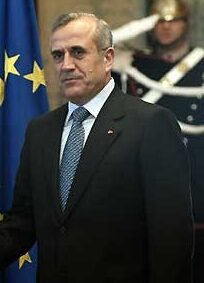 Michel Suleiman12th President of Lebanon
 Naim QassemSecretary-General of Hezbollah
 ElissaLebanese singer
 Kamal JumblattLebanese politician (1917-1977)