Leverhulme Medal
Leverhulme Medal is a medal awarded by the Royal Society. It was created in 1960. It is given by the Royal Society of London.
- Given by
- Royal Society of London
- Country
- United Kingdom
- Created
- 1960
All 8 facts, and where they come from
Facts
8 facts · 0 confirmed by two sources · 2 cited · 6 from one source
Where this comes from
Papalocal keeps its own record. It started from these sources; what each one said is kept here as it was copied, so a change on their side never changes this page by itself. Tap one to read its version.
What Wikidata says · copied November 17, 2026 · revision 2417333558
- Described as
- medal awarded by the Royal Society
- Other names
- Leverhulme Medal (Royal Society)
- What it is
- science award; medal; chemistry award
- Created
- 1960 · 1 reference
- Country
- United Kingdom
- Given by
- Royal Society of London
- Named after
- William Lever, 1st Viscount Leverhulme · 1 reference
- Official website
- https://royalsociety.org/grants-schemes-awards/awards/leverhulme-medal/
- Wikipedias with a page
- 15
Wikidata item Q535375 (wikidata.org/wiki/Q535375), public domain (CC0). Copied 2026-11-17.
What Wikipedia says · copied November 17, 2026 · revision 1308279271
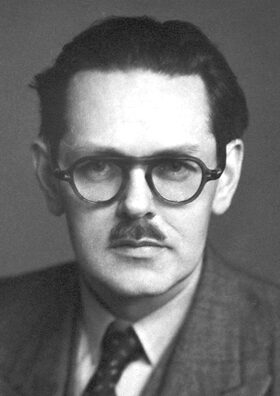
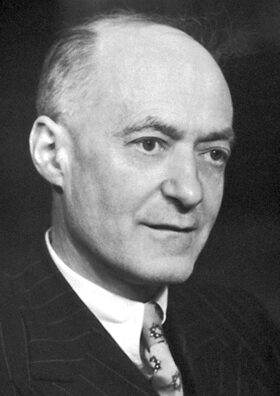
The Leverhulme Medal is awarded by the Royal Society every three years "for an outstandingly significant contribution in the field of pure or applied chemistry or engineering, including chemical engineering". It was created in 1960 after a donation by the Leverhulme Trust to mark the 300th anniversary of the foundation of the Royal Society, and is accompanied by a £2000 gift. Since its creation, it has been awarded 21 times, and unlike other Royal Society medals such as the Royal Medal, it has never been awarded to the same person multiple times. Citizens of the United Kingdom have won the medal 19 of the 21 times; the two foreign recipients have been Man Mohan Sharma, an Indian citizen who was awarded the medal in 1996 "for his work on the dynamics of multi-phase chemical reactions in industrial processes", and Frank Caruso, an Australian chemical engineer, awarded the medal in 2019. Two Leverhulme Medal winners have also won the Nobel Prize in Chemistry: Archer John Porter Martin, who won the medal in 1963 for "his distinguished and fundamental discoveries in chromatography and its application" and the Nobel Prize in 1952, and Cyril Norman Hinshelwood, who won the medal in 1960 for "his outstanding contributions to physical chemistry" and the Nobel Prize in 1956. Anne Neville became the first woman to receive the award in 2016.
From the Wikipedia article “Leverhulme Medal (Royal Society)” (en.wikipedia.org/wiki/Leverhulme_Medal_(Royal_Society)), by its contributors, under CC BY-SA 4.0 (creativecommons.org/licenses/by-sa/4.0/). Copied 2026-11-17; not changed.
Confirmed Two sources agree. Cited One source, and it names where it got it. One source One source, without a reference of its own. Sources disagree The sources disagree. We show the best-supported value and keep theirs below.