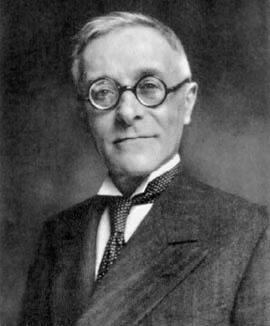
Levi-Civita connection
Levi-Civita connection is the unique torsion-free affine connection that preserves a given (pseudo-)Rimannian metric.
All 1 facts, and where they come from
Facts
1 facts · 0 confirmed by two sources · 0 cited · 1 from one source
Where this comes from
Papalocal keeps its own record. It started from these sources; what each one said is kept here as it was copied, so a change on their side never changes this page by itself. Tap one to read its version.
What Wikidata says · copied November 17, 2026 · revision 2560723703
- Described as
- the unique torsion-free affine connection that preserves a given (pseudo-)Rimannian metric
- Named after
- Tullio Levi-Civita
- Wikipedias with a page
- 16
Wikidata item Q548675 (wikidata.org/wiki/Q548675), public domain (CC0). Copied 2026-11-17.
What Wikipedia says · copied November 17, 2026 · revision 1374463735
In Riemannian or pseudo-Riemannian geometry (in particular the Lorentzian geometry of general relativity), the Levi-Civita connection is the unique affine connection on the tangent bundle of a manifold that preserves the (pseudo-)Riemannian metric and is torsion-free. The fundamental theorem of Riemannian geometry states that there is a unique connection that satisfies these properties.
The connection formalizes and generalizes the "rolling without slipping or twisting" method of transporting tangent planes of a smooth surface embedded in ℝ3 (or generally, any Riemannian manifold, by the Nash embedding theorems).
The covariant derivative is defined given any affine connection. In the theory of Riemannian and pseudo-Riemannian manifolds, the "covariant derivative" by default refers to the one defined using the Levi-Civita connection. The components (structure coefficients) of this connection with respect to a system of local coordinates are called Christoffel symbols.
From the Wikipedia article “Levi-Civita connection” (en.wikipedia.org/wiki/Levi-Civita_connection), by its contributors, under CC BY-SA 4.0 (creativecommons.org/licenses/by-sa/4.0/). Copied 2026-11-17; not changed.
Confirmed Two sources agree. Cited One source, and it names where it got it. One source One source, without a reference of its own. Sources disagree The sources disagree. We show the best-supported value and keep theirs below.