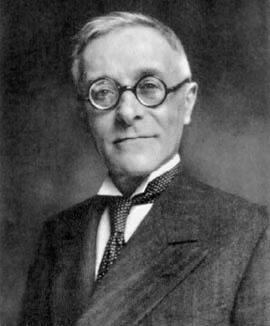
Levi-Civita field
Levi-Civita field is a system of numbers with non-finite quantities.
All 1 facts, and where they come from
Facts
1 facts · 0 confirmed by two sources · 0 cited · 1 from one source
Where this comes from
Papalocal keeps its own record. It started from these sources; what each one said is kept here as it was copied, so a change on their side never changes this page by itself. Tap one to read its version.
What Wikidata says · copied November 17, 2026 · revision 2394221733
- Described as
- system of numbers with non-finite quantities
- What it is
- algebraically closed field
- Wikipedias with a page
- 7
Wikidata item Q6535342 (wikidata.org/wiki/Q6535342), public domain (CC0). Copied 2026-11-17.
What Wikipedia says · copied November 17, 2026 · revision 1371701217
In mathematics, the Levi-Civita field, named after Tullio Levi-Civita, is a non-Archimedean ordered field; i.e., a system of numbers containing infinite and infinitesimal quantities. It is usually denoted ℛ.
Each member a can be constructed as a formal series of the forma=∑q∈ℚaqεq,
where ℚ is the set of rational numbers, the coefficients aq are real numbers, and ε is to be interpreted as a fixed positive infinitesimal. We require that for every rational number r, there are only finitely many q∈ℚ less than r with aq≠0; this restriction is necessary in order to make multiplication and division well defined and unique. Two such series are considered equal only if all their coefficients are equal. The ordering is defined according to the dictionary ordering of the list of coefficients, which is equivalent to the assumption that ε is an infinitesimal.
The real numbers are embedded in this field as series in which all of the coefficients vanish except a0.
From the Wikipedia article “Levi-Civita field” (en.wikipedia.org/wiki/Levi-Civita_field), by its contributors, under CC BY-SA 4.0 (creativecommons.org/licenses/by-sa/4.0/). Copied 2026-11-17; not changed.
Confirmed Two sources agree. Cited One source, and it names where it got it. One source One source, without a reference of its own. Sources disagree The sources disagree. We show the best-supported value and keep theirs below.