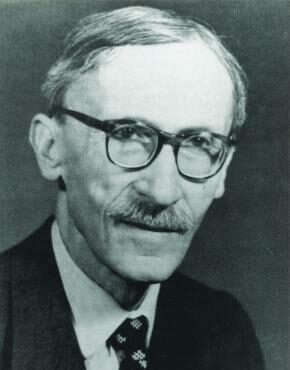
Lévy process
Lévy process is a stochastic process in probability theory.
All 2 facts, and where they come from
Facts
2 facts · 0 confirmed by two sources · 0 cited · 2 from one source
Where this comes from
Papalocal keeps its own record. It started from these sources; what each one said is kept here as it was copied, so a change on their side never changes this page by itself. Tap one to read its version.
What Wikidata says · copied November 18, 2026 · revision 2541697152
- Described as
- stochastic process in probability theory
- Other names
- Levy process
- What it is
- mathematical concept
- Named after
- Paul Pierre Lévy
- Wikipedias with a page
- 15
Wikidata item Q1557613 (wikidata.org/wiki/Q1557613), public domain (CC0). Copied 2026-11-18.
What Wikipedia says · copied November 18, 2026 · revision 1331473564
In probability theory, a Lévy process, named after the French mathematician Paul Lévy, is a stochastic process with independent, stationary increments: it represents the motion of a point whose successive displacements are random, in which displacements in pairwise disjoint time intervals are independent, and displacements in different time intervals of the same length have identical probability distributions. A Lévy process may thus be viewed as the continuous-time analog of a random walk.
The most well known examples of Lévy processes are the Wiener process, often called the Brownian motion process, and the Poisson process. Further important examples include the Gamma process, the Pascal process, and the Meixner process. Aside from Brownian motion with drift, all other proper (that is, not deterministic) Lévy processes have discontinuous paths. All Lévy processes are additive processes.
From the Wikipedia article “Lévy process” (en.wikipedia.org/wiki/Lévy_process), by its contributors, under CC BY-SA 4.0 (creativecommons.org/licenses/by-sa/4.0/). Copied 2026-11-18; not changed.
Confirmed Two sources agree. Cited One source, and it names where it got it. One source One source, without a reference of its own. Sources disagree The sources disagree. We show the best-supported value and keep theirs below.