
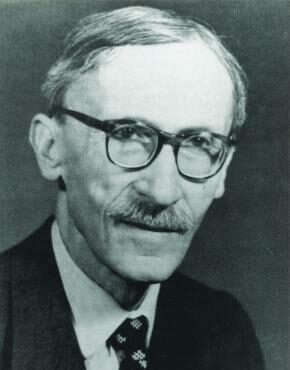
Paul Pierre Lévy
Paul Pierre Lévy was a French mathematician. Born September 15, 1886, in 5th arrondissement of Paris. Died December 15, 1971, in 16th arrondissement of Paris. Known for Wiener–Lévy theorem, Lévy process and Lévy's constant. Educated at Lycée Saint-Louis and École polytechnique. Awards include Cours Peccot, Poncelet Prize and Commander of the Legion of Honour.
Facts
32 facts · 2 confirmed by two sources · 24 cited · 6 from one source
Where this comes from
Papalocal keeps its own record. It started from these sources; what each one said is kept here as it was copied, so a change on their side never changes this page by itself. Tap one to read its version.
What Wikidata says · copied November 17, 2026 · revision 2558949024
- Described as
- French mathematician (1886–1971)
- Other names
- Paul Lévy, Paul Pierre Levy, Paul Levy
- Born
- September 15, 1886 · 5 references
- Died
- December 15, 1971 · 5 references
- Born in
- 5th arrondissement of Paris · 2 references
- Died in
- 16th arrondissement of Paris · 2 references
- Buried in
- Montparnasse Cemetery · 1 reference
- Name at birth
- Paul Pierre Lévy · 2 references
- Citizen of
- France · 1 reference
- Occupation
- mathematician · 2 references; engineer · 2 references; university teacher · 2 references
- Worked for
- Mines ParisTech (1914–1951) · 1 reference; École polytechnique (1920–1959) · 1 reference
- Education
- Lycée Saint-Louis (–1904) · 1 reference; École polytechnique (1904–1906); Mines ParisTech (1907–1910) · 1 reference; University of Paris (1911) · 1 reference
- Member of
- French Academy of Sciences (1964–1971) · 1 reference
- Known for
- Wiener–Lévy theorem; Lévy process; Lévy's constant; Lévy distribution; Lévy C curve
- Awards
- Cours Peccot (1918) · 1 reference; Poncelet Prize (1936) · 2 references; Commander of the Legion of Honour (1952) · 2 references; Émile Picard Medal (1953) · 1 reference; Concours général · 1 reference
- Field
- probability theory · 2 references; mathematics · 1 reference; stochastic process · 1 reference
- Children
- Marie-Hélène Schwartz · 3 references
- Father
- Lucien Lévy · 3 references
- Wikipedias with a page
- 26
Wikidata item Q441127 (wikidata.org/wiki/Q441127), public domain (CC0). Copied November 17, 2026.
What Wikipedia says · copied November 17, 2026 · revision 1386313501
Paul Pierre Lévy (French pronunciation: [pɔl pjɛʁ levi]; 15 September 1886 – 15 December 1971) was a French mathematician who was active especially in probability theory, introducing fundamental concepts such as local time, stable distributions and characteristic functions. Lévy processes, Lévy flights, Lévy measures, Lévy's constant, the Lévy distribution, the Lévy area, the Lévy arcsine law, and the fractal Lévy C curve are named after him.
- Born, in its opening lines
- September 15, 1886
- Died, in its opening lines
- December 15, 1971
From the Wikipedia article “Paul Lévy (mathematician)” (en.wikipedia.org/wiki/Paul_Lévy_(mathematician)), by its contributors, under CC BY-SA 4.0 (creativecommons.org/licenses/by-sa/4.0/). Copied November 17, 2026; not changed.
Confirmed Two sources agree. Cited One source, and it names where it got it. One source One source, without a reference of its own. Sources disagree The sources disagree. We show the best-supported value and keep theirs below.
