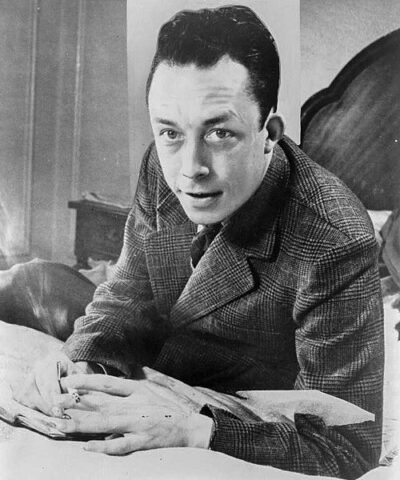
L'homme révolté
L'homme révolté is an essay by Albert Camus. It came out in 1951.
- Published
- 1951
- Written by
- Albert Camus
- Genre
- non-fiction literature
- Country of origin
- France
All 8 facts, and where they come from
Facts
8 facts · 0 confirmed by two sources · 3 cited · 5 from one source
Where this comes from
Papalocal keeps its own record. It started from these sources; what each one said is kept here as it was copied, so a change on their side never changes this page by itself. Tap one to read its version.
What Wikidata says · copied November 17, 2026 · revision 2535179550
- Described as
- essay by Albert Camus
- Other names
- The Rebel
- What it is
- literary work
- Written by
- Albert Camus · 1 reference
- Genre
- non-fiction literature; essay
- Published
- 1951
- Language
- French · 1 reference; German
- Country of origin
- France · 2 references
- Wikipedias with a page
- 25
Wikidata item Q1195789 (wikidata.org/wiki/Q1195789), public domain (CC0). Copied 2026-11-17.
What Wikipedia says · copied November 17, 2026 · revision 1384797823
The Rebel (French: L'Homme révolté) is a 1951 book-length essay by Albert Camus, which treats both the metaphysical and the historical development of rebellion and revolution in societies, especially Western Europe.
Examining both rebellion and revolt, which may be seen as the same phenomenon in personal and social frames, Camus examines several 'countercultural' figures and movements from the history of Western thought and art, noting the importance of each in the overall development of revolutionary thought and philosophy. He analyses the decreasing social importance of god, king and virtue and the development of nihilism. It can be seen as a sequel to The Myth of Sisyphus, where he ponders the meaning of life, because it answers the same question, but offers an alternative solution.
From the Wikipedia article “The Rebel (book)” (en.wikipedia.org/wiki/The_Rebel_(book)), by its contributors, under CC BY-SA 4.0 (creativecommons.org/licenses/by-sa/4.0/). Copied 2026-11-17; not changed.
Confirmed Two sources agree. Cited One source, and it names where it got it. One source One source, without a reference of its own. Sources disagree The sources disagree. We show the best-supported value and keep theirs below.
Picture: Wikimedia Commons: L'Homme révolté (Albert Camus).jpg · See Commons file page