

Liberal Democrats
Liberal Democrats is a centrist political party in the United Kingdom. It was founded in 1988. Its headquarters are in London. It stands for social liberalism, pro-Europeanism and liberalism.
- Country
- United Kingdom
- Founded
- March 3, 1988
- Ideology
- social liberalism
- Chair
- Ed Davey (2020–)
All 11 facts, and where they come from
Facts
11 facts · 0 confirmed by two sources · 0 cited · 11 from one source
Where this comes from
Papalocal keeps its own record. It started from these sources; what each one said is kept here as it was copied, so a change on their side never changes this page by itself. Tap one to read its version.
What Wikidata says · copied November 17, 2026 · revision 2553829247
- Described as
- centrist political party in the United Kingdom
- Other names
- Lib Dems, Liberal Democratic Party, Libdems
- What it is
- political party
- Comes after
- Social Democratic Party
- Founded
- March 3, 1988
- Headquarters
- London
- Country
- United Kingdom
- Chair
- Nick Clegg (2007–2015) · 1 reference; Tim Farron (2011–2017)
- Ideology
- social liberalism; pro-Europeanism; liberalism
- Official website
- https://www.libdems.org.uk/
- Wikipedias with a page
- 67
Wikidata item Q9624 (wikidata.org/wiki/Q9624), public domain (CC0). Copied 2026-11-17.
What Wikipedia says · copied November 17, 2026 · revision 1385976985
The Liberal Democrats, colloquially known as the Lib Dems, is a political party in the United Kingdom. Ideologically adhering to liberalism, it was founded in 1988. The party is based at Liberal Democrat Headquarters, which since September 2025 has been located at Buckingham Gate, in the Westminster area of Central London. The party's leader is Ed Davey. It is the third-largest party in the United Kingdom, with 71 members of Parliament (MPs) in the House of Commons. It has 79 members of the House of Lords, 10 in the Scottish Parliament, 1 in the Welsh Senedd, and around 3,200 local council seats. The party holds a twice yearly Liberal Democrat Conference, at which policy is formulated. In contrast to its main opponents, the Lib Dems grant all members attending Conference the right to vote on policy, under a one member, one vote system. As well as voting in the Conference Hall, the party allows its members to vote online for its policies and leadership elections. Members are also free to join organisations representing strands of party thinking, such as Liberal Reform and Social Liberal Forum, and for those under 30 years, Young Liberals.
In 1981, an electoral alliance was established between the Liberal Party, a group which descended from the 18th-century Whigs, and the Social Democratic Party (SDP), a splinter group from the Labour Party. In 1988, the parties merged as the Social and Liberal Democrats, adopting their present name a year later. Under the leaderships of Paddy Ashdown and Charles Kennedy, the party grew in the 1990s and 2000s, focusing its campaigns on specific seats and retained the third-largest party status in the House of Commons, although with significantly more seats than the predecessor Liberal Party. In the 1997 election, the Liberal Democrats doubled their seat count to 46. In 2010, under Nick Clegg's leadership, the Lib Dems were junior partners in the Conservative-led coalition government, in which Clegg served as deputy prime minister. Though it allowed the party to implement some of its policies, the coalition damaged its electoral standing; it lost 48 of its 56 MPs at the 2015 general election, which relegated it to fourth-largest party in the House of Commons. Under the leaderships of Tim Farron, Vince Cable and Jo Swinson, the party refocused as a pro-Europeanist party opposing Brexit. In the 2019 general election, the party garnered 11.5% of the vote on an anti-Brexit platform, but this did not translate into seat gains. However, the party's success was renewed under the leadership of Ed Davey, winning hundreds of councillors and 72 MPs in the 2024 general election, its highest result since 1923, and resuming its status as the third largest party in the House of Commons.
A centrist to centre-left party, the Lib Dems ideologically draw upon liberalism and social democracy. Different factions have dominated the party at different times, each with its own ideological bent. Some factions leaned towards the centre-left, while others were in the centre. The party is a member of the Alliance of Liberals and Democrats for Europe Party (ALDE), and Liberal International. It calls for constitutional reform, including a change from first-past-the-post voting to proportional representation. Emphasising stronger protections for civil liberties, the party promotes social-liberal approaches to issues like LGBT rights, drug liberalisation, education and criminal justice. It favours a market-based economy supplemented with social welfare spending. The party has been described as progressive, and is internationalist and pro-European, and supported the People's Vote for UK membership of the European Union and greater European integration, having previously called for adoption of the euro. The Lib Dems have promoted further environmental protections and opposed British military ventures such as the Iraq War.
The Lib Dems have historically been strongest in northern Scotland, south-west London, South West England, and mid Wales. Membership is primarily made up of middle-class professionals and has a higher proportion of university-educated members than other UK parties. The party is a federation of the English, Scottish, and Welsh Liberal Democrats, and is in a partnership with the Alliance Party of Northern Ireland, while still organising there.
From the Wikipedia article “Liberal Democrats (UK)” (en.wikipedia.org/wiki/Liberal_Democrats_(UK)), by its contributors, under CC BY-SA 4.0 (creativecommons.org/licenses/by-sa/4.0/). Copied 2026-11-17; not changed.
Confirmed Two sources agree. Cited One source, and it names where it got it. One source One source, without a reference of its own. Sources disagree The sources disagree. We show the best-supported value and keep theirs below.
Picture: Wikimedia Commons: Liberal Democrat Conference 2011.jpg · See Commons file page
People connected 12
Party members
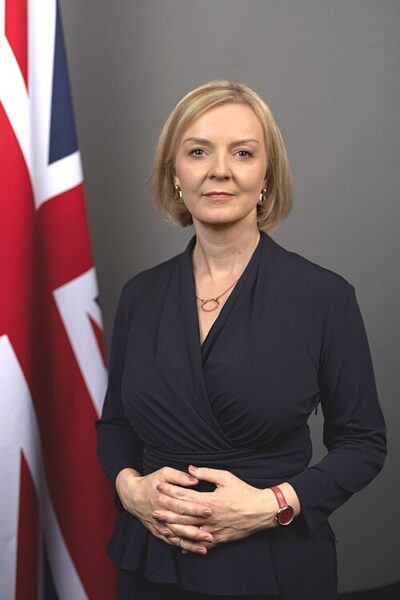 Liz Truss (–1996)Prime Minister of the United Kingdom in 2022
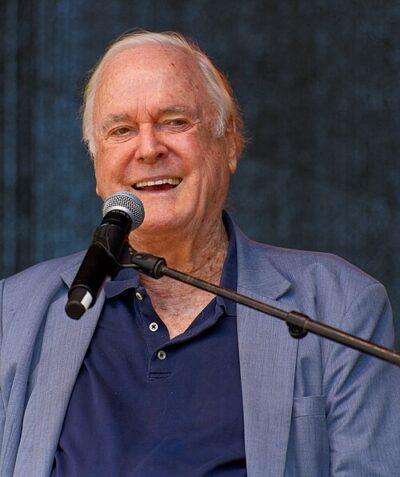 John CleeseEnglish comedian and actor (born 1939)
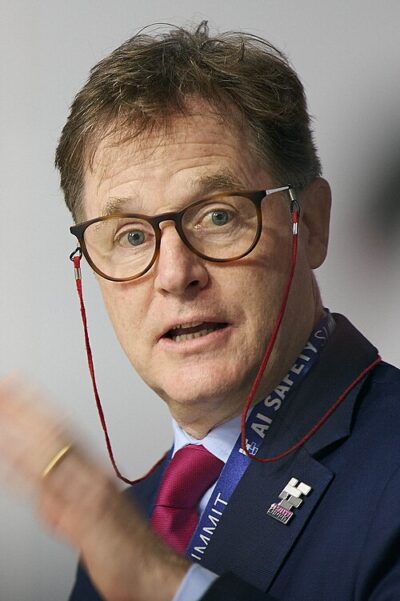 Nick CleggBritish politician and media executive (born 1967)
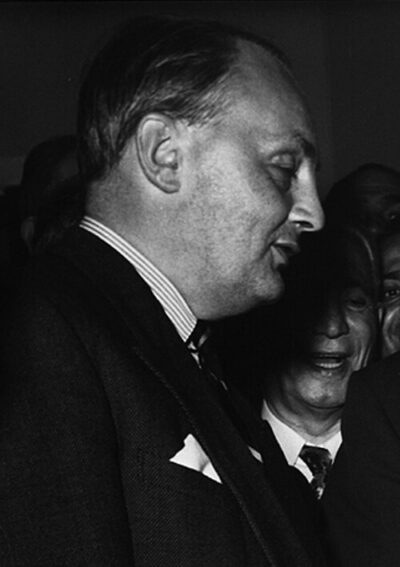 Gladwyn Jebb (1988–)acting Secretary-General of the United Nations (1900-1996)
 Ralf DahrendorfGerman-British sociologist, politician (1929–2009)
 Paddy Ashdown (1988–)British politician and diplomat (1941–2018)
 Roy Jenkins (1988–2003)British politician (1920–2003)
 Jo SwinsonBritish politician and leader of the Liberal Democrats (born 1980)
 Vince CableBritish politician (born 1943)
 Charles Kennedy (1988–)British politician (1959-2015)
 Tim FarronBritish politician (born 1970)
 Shirley Williams (1988–)British politician and academic (1930–2021)
