Liberty Party
The Liberty Party is an American political party active primarily in the 1840s. It was founded in 1839.
- Country
- United States
- Founded
- 1839
All 4 facts, and where they come from
Facts
4 facts · 0 confirmed by two sources · 0 cited · 4 from one source
Where this comes from
Papalocal keeps its own record. It started from these sources; what each one said is kept here as it was copied, so a change on their side never changes this page by itself. Tap one to read its version.
What Wikidata says · copied November 17, 2026 · revision 2494918955
- Described as
- American political party active primarily in the 1840s
- What it is
- political party
- Founded
- 1839
- Ended
- 1860
- Country
- United States
- Wikipedias with a page
- 10
Wikidata item Q4346026 (wikidata.org/wiki/Q4346026), public domain (CC0). Copied 2026-11-17.
What Wikipedia says · copied November 17, 2026 · revision 1382439335
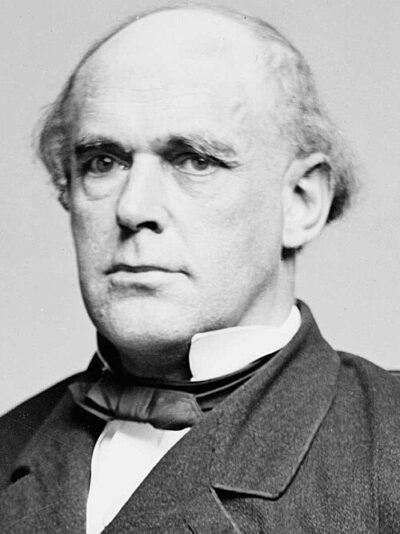
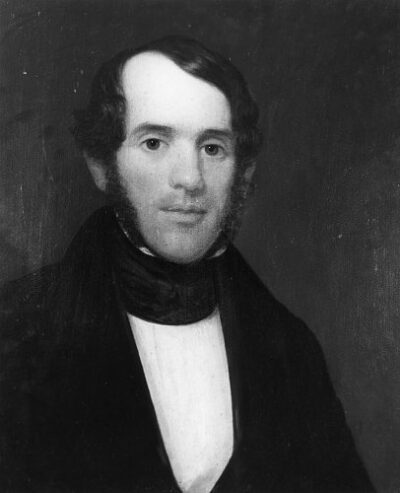
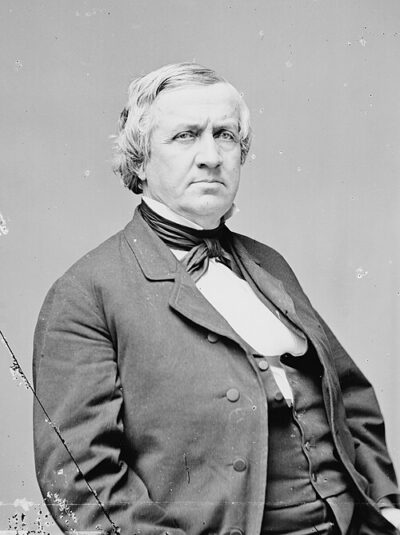
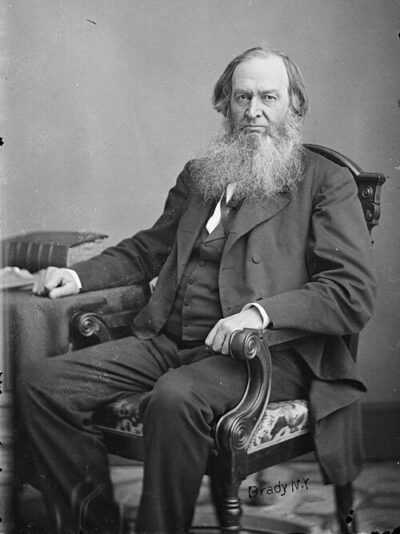
The Liberty Party was an abolitionist political party in the United States before the American Civil War. The party experienced its greatest activity during the 1840s, while remnants persisted as late as 1860. It supported James G. Birney in the presidential elections of 1840 and 1844. Others who attained prominence as leaders of the Liberty Party included Gerrit Smith, Salmon P. Chase, Henry Highland Garnet, Henry Bibb, and William Goodell. They attempted to work within the federal system created by the United States Constitution to diminish the political influence of the Slave Power and advance the cause of universal emancipation and an integrated, egalitarian society.
In the late 1830s, the antislavery movement in the United States was divided between Garrisonian abolitionists, who advocated nonresistance and anti-clericalism and opposed any involvement in electoral politics, and Anti-Garrisonians, who increasingly argued for the necessity of direct political action and the formation of an anti-slavery third party. At a meeting of the American Anti-Slavery Society in May 1840, the Anti-Garrisonians broke away from the Old Organization to form the American and Foreign Anti-Slavery Society. The New Organization included many political abolitionists who gathered in upstate New York to organize the Liberty Party ahead of the 1840 elections. They rejected the Garrisonian singular emphasis on moral suasion and asserted that abolitionists should oppose slavery by all available means, including by coordinating at the ballot box.
The party attracted support from former Whigs and Jacksonian Democrats alienated by their parties' proslavery national leaderships, as well as the early involvement of women and African Americans. Internal disagreements over whether and how the party should cooperate with abolitionists who remained within the two major parties and to what extent Liberty candidates should address issues beyond slavery intensified after 1844. In 1847 party leaders favoring a coalition with antislavery Conscience Whigs and Barnburner Democrats succeeded in nominating John P. Hale for president over Gerrit Smith, the candidate of the radical Liberty League. Hale was an Independent Democrat who had opposed the gag rule in Congress and voted against the annexation of Texas but stopped short of endorsing immediate emancipation. Following the 1848 convention of antislavery politicians at Buffalo, New York, Hale withdrew from the race in favor of Martin Van Buren, and most of the Liberty Party folded into the larger Free Soil Party. Smith and the Liberty League continued to maintain a separate organization and supported an independent ticket in each ensuing election until 1860. Many former Liberty leaders subsequently became founders of the Republican Party, including Salmon Chase.
From the Wikipedia article “Liberty Party (United States, 1840)” (en.wikipedia.org/wiki/Liberty_Party_(United_States,_1840)), by its contributors, under CC BY-SA 4.0 (creativecommons.org/licenses/by-sa/4.0/). Copied 2026-11-17; not changed.
Confirmed Two sources agree. Cited One source, and it names where it got it. One source One source, without a reference of its own. Sources disagree The sources disagree. We show the best-supported value and keep theirs below.