

Library of Congress
The Library of Congress is a (de facto) national library of the United States of America. It was founded in 1800. Its headquarters are in Washington, D.C. It has 3,242 employees (2020). It won the Silver Anvil Award (2 times).
- Founded
- April 24, 1800
- Headquarters
- Washington, D.C.
- Employees
- 3,242 (2020)
- Country
- United States
All 12 facts, and where they come from
Facts
12 facts · 0 confirmed by two sources · 7 cited · 5 from one source
Where this comes from
Papalocal keeps its own record. It started from these sources; what each one said is kept here as it was copied, so a change on their side never changes this page by itself. Tap one to read its version.
What Wikidata says · copied November 16, 2026 · revision 2567720972
- Described as
- (de facto) national library of the United States of America
- Other names
- LC, LOC, Congressional Library, United States. Library of Congress, US Library of Congress, LoC, loc.gov
- What it is
- national library · 1 reference; United Nations Depository Library; parliamentary archives
- Founded
- April 24, 1800 · 3 references
- Headquarters
- Washington, D.C. · 4 references
- Located in
- Washington, D.C. · 1 reference
- Country
- United States · 4 references
- Chair
- Carla Hayden (2016–2025) · 1 reference
- Employees
- 3,210 (2019) · 1 reference
- Field
- library
- Awards
- Silver Anvil Award (2 times) (2002, 2024)
- Official website
- https://loc.gov/
- Wikipedias with a page
- 103
Wikidata item Q131454 (wikidata.org/wiki/Q131454), public domain (CC0). Copied 2026-11-16.
What Wikipedia says · copied November 16, 2026 · revision 1379621015
The Library of Congress (LOC) is a research library in Washington, D.C., serving as the library and research service for the United States Congress and the de facto national library of the United States. It also administers copyright law through the United States Copyright Office, and it houses the Congressional Research Service.
Founded in 1800, the Library of Congress is the oldest federal cultural institution in the United States. It is housed in three buildings on Capitol Hill, adjacent to the United States Capitol, along with the National Audio-Visual Conservation Center in Culpeper, Virginia, and additional storage facilities at Fort George G. Meade and Cabin Branch in Hyattsville, Maryland. The library's functions are overseen by the librarian of Congress, and its buildings are maintained by the architect of the Capitol. The library is one of the largest libraries in the world, containing approximately 173 million items and employing over 3,000 staff. Its collections are "universal, not limited by subject, format, or national boundary, and include research materials from all parts of the world and in more than 470 languages".
When Congress moved to Washington in November 1800, a small congressional library was housed in the Capitol. Much of the original collection was lost during the 1814 burning of Washington by British forces during the War of 1812. Congress accepted former president Thomas Jefferson's offer to sell his entire personal collection of 6,487 books to restore the library. The collection grew slowly and suffered another major fire in 1851, which destroyed two-thirds of Jefferson's original books.
The Library of Congress faced space shortages, understaffing, and lack of funding, until the American Civil War increased the importance of legislative research to meet the demands of a growing federal government. In 1870, the library gained the right to receive two copies of every copyrightable work printed in the United States; it also built its collections through acquisitions and donations. Between 1890 and 1897, a new library building, now the Thomas Jefferson Building, was constructed. Two additional buildings, the John Adams Building (opened in 1939) and the James Madison Memorial Building (opened in 1980), were later added.
The LC's Congressional Research Service provides objective non-partisan research to Congress to assist it in passing legislation. The library is open to the public for research, although only members of Congress, their staff, and library employees may borrow materials for use outside the library.
From the Wikipedia article “Library of Congress” (en.wikipedia.org/wiki/Library_of_Congress), by its contributors, under CC BY-SA 4.0 (creativecommons.org/licenses/by-sa/4.0/). Copied 2026-11-16; not changed.
Confirmed Two sources agree. Cited One source, and it names where it got it. One source One source, without a reference of its own. Sources disagree The sources disagree. We show the best-supported value and keep theirs below.
Picture: Wikimedia Commons: Thomas Jefferson Building Aerial by Carol M. Highsmith.jpg · See Commons file page
People connected 5
Worked here
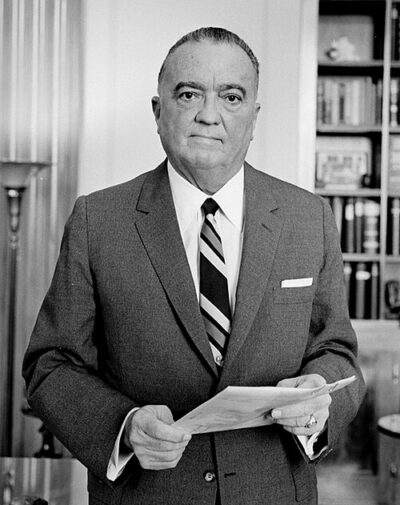 J. Edgar HooverAmerican law enforcement administrator (1895–1972)
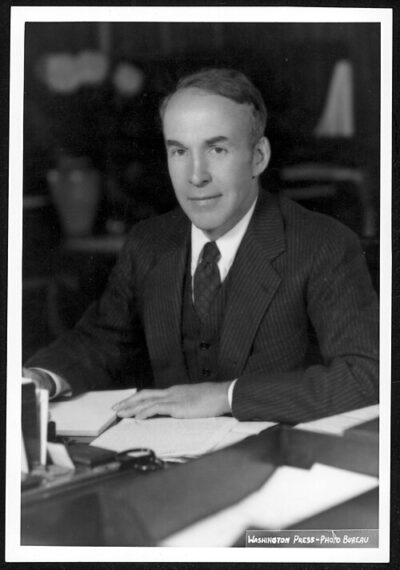 Archibald MacLeishAmerican poet and Librarian of Congress (1892-1982)
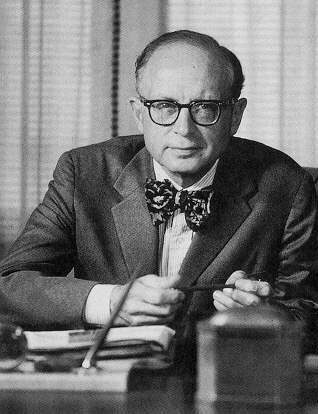 Daniel J. BoorstinAmerican historian (1914–2004)
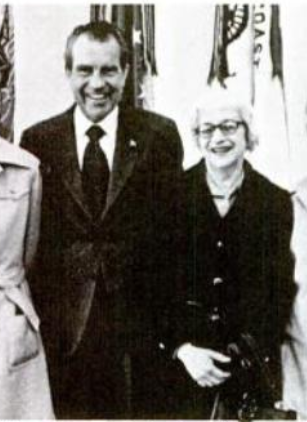 Henriette Avram (1965–1992)American computer programmer and system analyst (1919–2006)
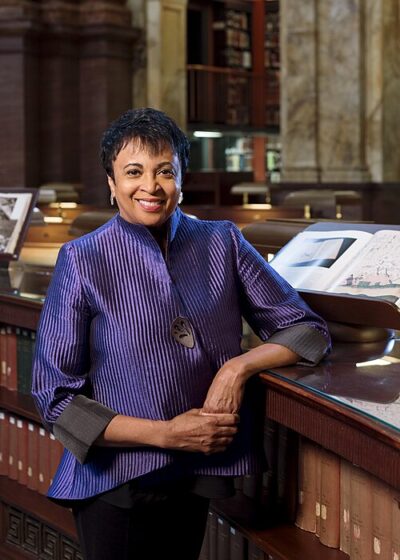 Carla Hayden (2016–2025)American librarian and 14th Librarian of Congress (born 1952)
