Lorentz covariance
Lorentz covariance is an equivalence in relativistic physics of observation with respect to change of (inertial) reference frame.
All 1 facts, and where they come from
Facts
1 facts · 0 confirmed by two sources · 0 cited · 1 from one source
Where this comes from
Papalocal keeps its own record. It started from these sources; what each one said is kept here as it was copied, so a change on their side never changes this page by itself. Tap one to read its version.
What Wikidata says · copied November 17, 2026 · revision 2516316161
- Described as
- equivalence in relativistic physics of observation with respect to change of (inertial) reference frame
- Other names
- Lorentz Invariance
- What it is
- term
- Wikipedias with a page
- 22
Wikidata item Q1093427 (wikidata.org/wiki/Q1093427), public domain (CC0). Copied 2026-11-17.
What Wikipedia says · copied November 17, 2026 · revision 1369617467
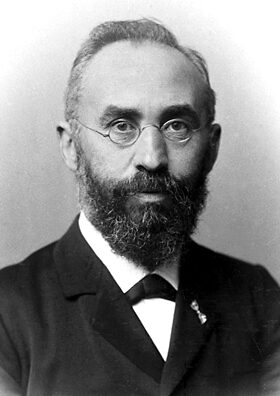
In relativistic physics, Lorentz symmetry or Lorentz invariance, named after the Dutch physicist Hendrik Lorentz, is an equivalence of observation or observational symmetry due to special relativity implying that the laws of physics stay the same for all observers that are moving with respect to one another within an inertial frame. It has also been described as "the feature of nature that says experimental results are independent of the orientation or the boost velocity of the laboratory through space".
Lorentz covariance, a related concept, is a property of the underlying spacetime manifold. Lorentz covariance has two distinct, but closely related meanings:A physical quantity is said to be Lorentz covariant if it transforms under a given representation of the Lorentz group. According to the representation theory of the Lorentz group, these quantities are built out of scalars, four-vectors, four-tensors, and spinors. In particular, a Lorentz covariant scalar (e.g., the space-time interval) remains the same under Lorentz transformations and is said to be a Lorentz invariant (i.e., they transform under the trivial representation).
An equation is said to be Lorentz covariant if it can be written in terms of Lorentz covariant quantities (confusingly, some use the term invariant here). The key property of such equations is that if they hold in one inertial frame, then they hold in any inertial frame; this follows from the result that if all the components of a tensor vanish in one frame, they vanish in every frame. This condition is a requirement according to the principle of relativity; i.e., all non-gravitational laws must make the same predictions for identical experiments taking place at the same spacetime event in two different inertial frames of reference.
On manifolds, the words covariant and contravariant refer to how objects transform under general coordinate transformations. Both covariant and contravariant four-vectors can be Lorentz covariant quantities.
Local Lorentz covariance, which follows from general relativity, refers to Lorentz covariance applying only locally in an infinitesimal region of spacetime at every point. There is a generalization of this concept to cover Poincaré covariance and Poincaré invariance.
From the Wikipedia article “Lorentz covariance” (en.wikipedia.org/wiki/Lorentz_covariance), by its contributors, under CC BY-SA 4.0 (creativecommons.org/licenses/by-sa/4.0/). Copied 2026-11-17; not changed.
Confirmed Two sources agree. Cited One source, and it names where it got it. One source One source, without a reference of its own. Sources disagree The sources disagree. We show the best-supported value and keep theirs below.