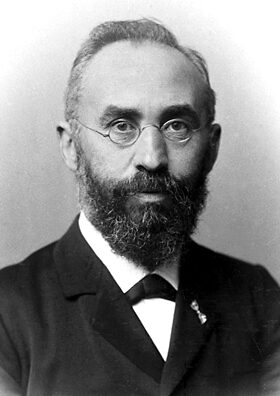
Lorentz group
Lorentz group is a Lie group of Lorentz transformations.
All 2 facts, and where they come from
Facts
2 facts · 0 confirmed by two sources · 0 cited · 2 from one source
Where this comes from
Papalocal keeps its own record. It started from these sources; what each one said is kept here as it was copied, so a change on their side never changes this page by itself. Tap one to read its version.
What Wikidata says · copied November 17, 2026 · revision 2489754590
- Described as
- Lie group of Lorentz transformations
- Other names
- Lorentz symmetry, SO(1,3), SO(3,1), O(1,3), O(3,1)
- What it is
- mathematical concept
- Named after
- Hendrik Lorentz
- Wikipedias with a page
- 21
Wikidata item Q1334417 (wikidata.org/wiki/Q1334417), public domain (CC0). Copied 2026-11-17.
What Wikipedia says · copied November 17, 2026 · revision 1380840123
In physics and mathematics, the Lorentz group is the group of all Lorentz transformations of Minkowski spacetime, the classical and quantum setting for all (non-gravitational) physical phenomena. The Lorentz group is named for the Dutch physicist Hendrik Lorentz.
For example, the following laws, equations, and theories respect Lorentz symmetry:The kinematical laws of special relativity
The local (differential) structure of general relativity
Maxwell's field equations in the theory of electromagnetism
The Dirac equation in the theory of the electron
The Standard Model of particle physics
The Lorentz group expresses the fundamental symmetry of space and time of all known fundamental laws of nature. In small enough regions of spacetime where gravitational variation is negligible, physical laws are Lorentz-invariant.
From the Wikipedia article “Lorentz group” (en.wikipedia.org/wiki/Lorentz_group), by its contributors, under CC BY-SA 4.0 (creativecommons.org/licenses/by-sa/4.0/). Copied 2026-11-17; not changed.
Confirmed Two sources agree. Cited One source, and it names where it got it. One source One source, without a reference of its own. Sources disagree The sources disagree. We show the best-supported value and keep theirs below.