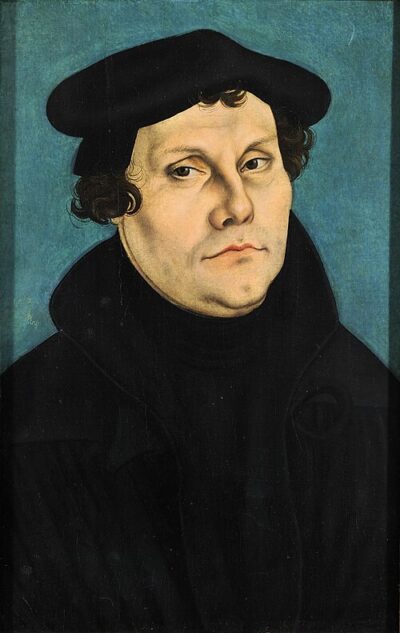
Luther Bible
Luther Bible is a German-language translation of the Bible by Martin Luther. It came out in 1534.
- Released
- 1534
- Written by
- Martin Luther
- Genre
- religious text
All 5 facts, and where they come from
Facts
5 facts · 0 confirmed by two sources · 0 cited · 5 from one source
Where this comes from
Papalocal keeps its own record. It started from these sources; what each one said is kept here as it was copied, so a change on their side never changes this page by itself. Tap one to read its version.
What Wikidata says · copied November 17, 2026 · revision 2568368498
- Described as
- German-language translation of the Bible by Martin Luther
- What it is
- Bible translation into German
- Written by
- Martin Luther
- Genre
- religious text · 1 reference
- Released
- 1534
- Language
- Early New High German
- Wikipedias with a page
- 31
Wikidata item Q1571095 (wikidata.org/wiki/Q1571095), public domain (CC0). Copied 2026-11-17.
What Wikipedia says · copied November 17, 2026 · revision 1386069433
The Luther Bible (German: Lutherbibel) is a German language Bible translation by the Protestant reformer Martin Luther. A New Testament translation by Luther was first published in September 1522; the completed Bible contained 75 books, including the Old Testament, Apocrypha and New Testament, which was printed in 1534. Luther continued to make improvements to the text until 1545. It was one of the first full translations of the Bible into German that used not only the Latin Vulgate but the original Hebrew and Greek.
Luther did not translate the entire Bible on his own; he relied on a team of translators and helpers that included Philip Melanchthon, a scholar of Koine Greek who motivated and assisted Luther's New Testament translation from Greek, and Matthäus Aurogallus, a linguist and scholar of Hebrew. One of the textual bases of the New Testament translation was the bilingual Latin and Greek version, with its philological annotations, recently published by the Dutch Catholic humanist Erasmus of Rotterdam and called the Novum Testamentum omne (1519).
The project absorbed Luther's later years. The publication of Luther's Bible was a decisive moment in the spread of literacy in early modern Germany, promoting the development of non-local forms of language and exposing all speakers to forms of German from outside their own areas. Thanks to the then recently invented printing press, the result was widely disseminated and contributed significantly to the development of today's modern High German language.
It is a common misconception that Martin Luther removed certain books from the Bible; rather, "Luther collected the apocryphal books and placed them at the end of the Old Testament, rather than have them interspersed among the other books." The Luther Bible influenced the production of Bibles used by the Evangelical-Lutheran Churches worldwide. In the present-day, the official Evangelical-Lutheran Bible translations (such as Bibel 2000) in the Nordic-Baltic region continue to include the Old Testament, Apocrypha, and New Testament, for a total of 77 books in a full Evangelical-Lutheran Bible.
From the Wikipedia article “Luther Bible” (en.wikipedia.org/wiki/Luther_Bible), by its contributors, under CC BY-SA 4.0 (creativecommons.org/licenses/by-sa/4.0/). Copied 2026-11-17; not changed.
Confirmed Two sources agree. Cited One source, and it names where it got it. One source One source, without a reference of its own. Sources disagree The sources disagree. We show the best-supported value and keep theirs below.
Picture: Wikimedia Commons: Lutherbibel.jpg · See Commons file page