Má vlast
Má vlast is a symphonic poem by Bedřich Smetana.
All 2 facts, and where they come from
Facts
2 facts · 0 confirmed by two sources · 0 cited · 2 from one source
Where this comes from
Papalocal keeps its own record. It started from these sources; what each one said is kept here as it was copied, so a change on their side never changes this page by itself. Tap one to read its version.
What Wikidata says · copied November 17, 2026 · revision 2569405235
- Described as
- symphonic poem by Bedřich Smetana
- Other names
- My Country, My Fatherland, My Homeland, My Land, Ma vlast
- What it is
- musical work/composition
- Music by
- Bedřich Smetana
- Wikipedias with a page
- 27
Wikidata item Q1044709 (wikidata.org/wiki/Q1044709), public domain (CC0). Copied 2026-11-17.
What Wikipedia says · copied November 17, 2026 · revision 1368004568
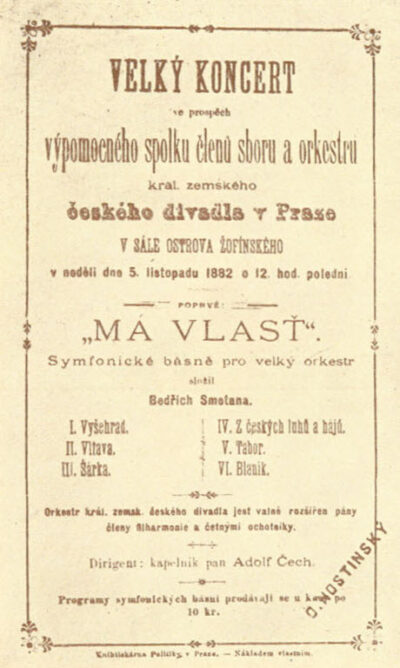
Má vlast (Czech pronunciation: [maː vlast]), also known as My Fatherland, is a set of six symphonic poems composed between 1874 and 1879 by the Czech composer Bedřich Smetana. The six pieces, conceived as individual works, are often presented and recorded as a single work in six movements. They premiered separately between 1875 and 1880. The complete set premiered on 5 November 1882 in Žofín Palace, Prague, under Adolf Čech.
Má vlast combines the symphonic poem form, pioneered by Franz Liszt, with the ideals of nationalistic music of the late nineteenth century. Each poem depicts an aspect of Bohemia's countryside, history, or legends.
The works have opened the Prague Spring International Music Festival, on the 12 May anniversary of the death of their composer, since 1952.
From the Wikipedia article “Má vlast” (en.wikipedia.org/wiki/Má_vlast), by its contributors, under CC BY-SA 4.0 (creativecommons.org/licenses/by-sa/4.0/). Copied 2026-11-17; not changed.
Confirmed Two sources agree. Cited One source, and it names where it got it. One source One source, without a reference of its own. Sources disagree The sources disagree. We show the best-supported value and keep theirs below.
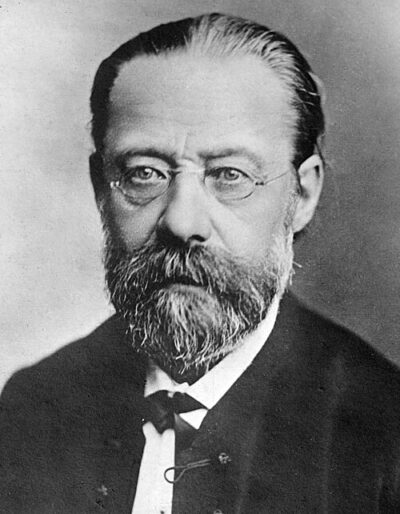
Picture: Bedřich Smetana, via Wikimedia Commons · Public domain