Manfred
Manfred is a closet drama by Lord Byron. It came out in 1817.
- Published
- 1817
- Written by
- Lord Byron
- Genre
- tragedy
All 6 facts, and where they come from
Facts
6 facts · 0 confirmed by two sources · 0 cited · 6 from one source
Where this comes from
Papalocal keeps its own record. It started from these sources; what each one said is kept here as it was copied, so a change on their side never changes this page by itself. Tap one to read its version.
What Wikidata says · copied November 17, 2026 · revision 2458352182
- Described as
- closet drama by Lord Byron
- What it is
- literary work
- Written by
- Lord Byron
- Genre
- tragedy; closet drama
- Published
- 1817
- Language
- English
- Wikipedias with a page
- 19
Wikidata item Q1889169 (wikidata.org/wiki/Q1889169), public domain (CC0). Copied 2026-11-17.
What Wikipedia says · copied November 17, 2026 · revision 1356048122
Manfred: A dramatic poem is a closet drama written in 1816–1817 by Lord Byron. It contains supernatural elements, in keeping with the popularity of the ghost story in England at the time. It is a typical example of Gothic fiction.
Byron commenced this work in late 1816, a few months after the famous ghost-story sessions with Percy Bysshe Shelley and Mary Shelley that provided the initial impetus for Frankenstein; or, The Modern Prometheus. The supernatural references are made clear throughout the poem.
Manfred was adapted musically by Robert Schumann in 1848–1849, in a composition entitled Manfred: Dramatic Poem with Music in Three Parts, and in 1885 by Pyotr Ilyich Tchaikovsky in his Manfred Symphony. Friedrich Nietzsche was inspired by the poem's depiction of a super-human being to compose a piano score in 1872 based on it, "Manfred Meditation".
From the Wikipedia article “Manfred (drama)” (en.wikipedia.org/wiki/Manfred_(drama)), by its contributors, under CC BY-SA 4.0 (creativecommons.org/licenses/by-sa/4.0/). Copied 2026-11-17; not changed.
Confirmed Two sources agree. Cited One source, and it names where it got it. One source One source, without a reference of its own. Sources disagree The sources disagree. We show the best-supported value and keep theirs below.
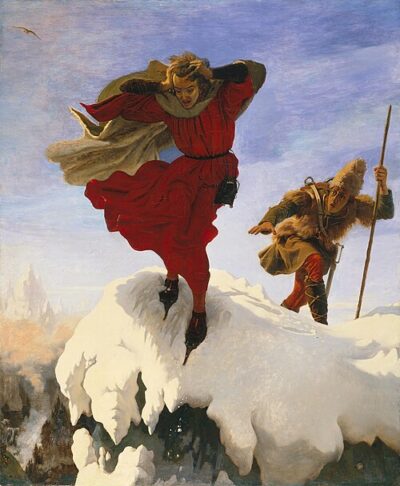
Picture: Ford Madox Brown, via Wikimedia Commons · Public domain