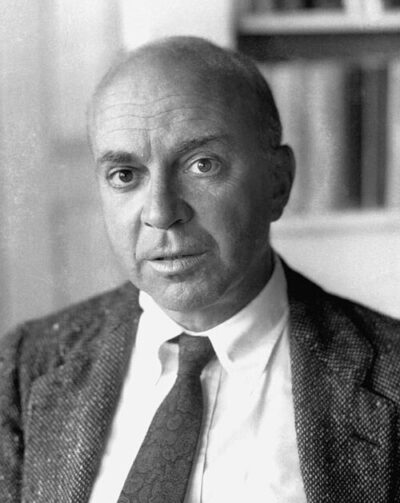
Manhattan Transfer
Manhattan Transfer is a 1925 novel by John Dos Passos. It won the Le Monde's 100 Books of the Century.
- Published
- 1925
- Written by
- John Dos Passos
- Country of origin
- United States
All 7 facts, and where they come from
Facts
7 facts · 0 confirmed by two sources · 0 cited · 7 from one source
Where this comes from
Papalocal keeps its own record. It started from these sources; what each one said is kept here as it was copied, so a change on their side never changes this page by itself. Tap one to read its version.
What Wikidata says · copied November 16, 2026 · revision 2488380479
- Described as
- 1925 novel by John Dos Passos
- What it is
- literary work
- Written by
- John Dos Passos
- Publisher
- Harper
- Published
- 1925 · 1 reference
- Language
- English
- Country of origin
- United States
- Awards
- Le Monde's 100 Books of the Century
- Wikipedias with a page
- 19
Wikidata item Q1648409 (wikidata.org/wiki/Q1648409), public domain (CC0). Copied 2026-11-16.
What Wikipedia says · copied November 16, 2026 · revision 1384266293
Manhattan Transfer is an American novel by John Dos Passos published in 1925. It focuses on the development of urban life in New York City from the Gilded Age to the Jazz Age as told through a series of overlapping individual stories.
It is considered to be one of Dos Passos' most important works. The book attacks the consumerism and social indifference of contemporary urban life, portraying a Manhattan that is merciless yet teeming with energy and restlessness. The book shows some of Dos Passos' experimental writing techniques and narrative collages that would become more pronounced in his U.S.A. trilogy and other later works. The technique in Manhattan Transfer was inspired in part by James Joyce's Ulysses and T. S. Eliot's The Waste Land (both 1922), and bears frequent comparison to the experiments with film collage by Soviet director Sergei Eisenstein.
Sinclair Lewis described it as "a novel of the very first importance ... The dawn of a whole new school of writing." D. H. Lawrence called it "the best modern book about New York" he had ever read, describing it as "a very complete film ... of the vast loose gang of strivers and winners and losers which seems to be the very pep of New York." In a blurb for a European edition, Ernest Hemingway wrote that, alone among American writers, Dos Passos has "been able to show to Europeans the America they really find when they come here."
From the Wikipedia article “Manhattan Transfer (novel)” (en.wikipedia.org/wiki/Manhattan_Transfer_(novel)), by its contributors, under CC BY-SA 4.0 (creativecommons.org/licenses/by-sa/4.0/). Copied 2026-11-16; not changed.
Confirmed Two sources agree. Cited One source, and it names where it got it. One source One source, without a reference of its own. Sources disagree The sources disagree. We show the best-supported value and keep theirs below.
Picture: Wikimedia Commons: ManhattanTransfer.jpg · See Commons file page